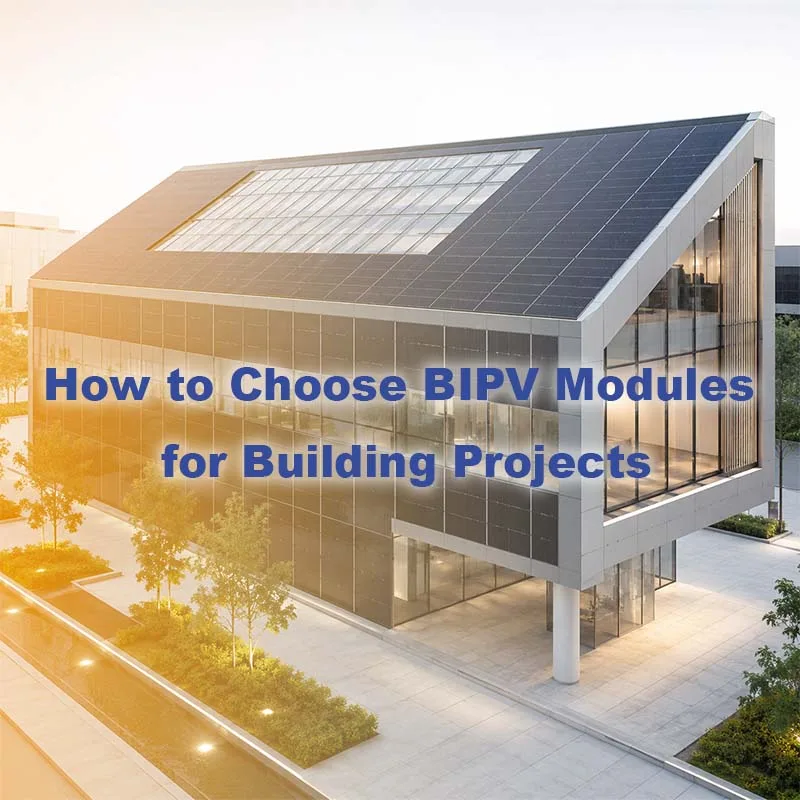
BIPV modules are not chosen in the same way as standard solar panels.
For a conventional rooftop PV project, buyers often begin with electrical output, module efficiency, available roof area, and installation cost. Those factors still matter in a BIPV project, but they are only part of the decision. Building-integrated photovoltaic modules also become part of the building envelope. They may need to act as facade cladding, roof material, glazing, shading, waterproofing support, or a visible architectural surface.
That changes the buying question.
Instead of asking only “Which solar panel produces the most power?”, project teams should ask:
- Where will the module be integrated into the building?
- What building material or envelope function will it support or replace?
- What appearance, size, transparency, color, and mounting requirements must it meet?
- What technical documents are needed for design review, quotation, installation, and local approval?
- Which risks should be checked before the module is specified?
This guide explains how architects, developers, EPC contractors, facade consultants, and procurement teams can choose BIPV modules for facade, roof, and broader building envelope projects.
Table of Contents
What Makes BIPV Modules Different from Standard Solar Panels?
A standard solar panel is usually installed onto an existing roof or structure. A BIPV module is selected as part of the building design. It may contribute to the energy system while also affecting the building’s appearance, envelope performance, installation method, and long-term maintenance plan.
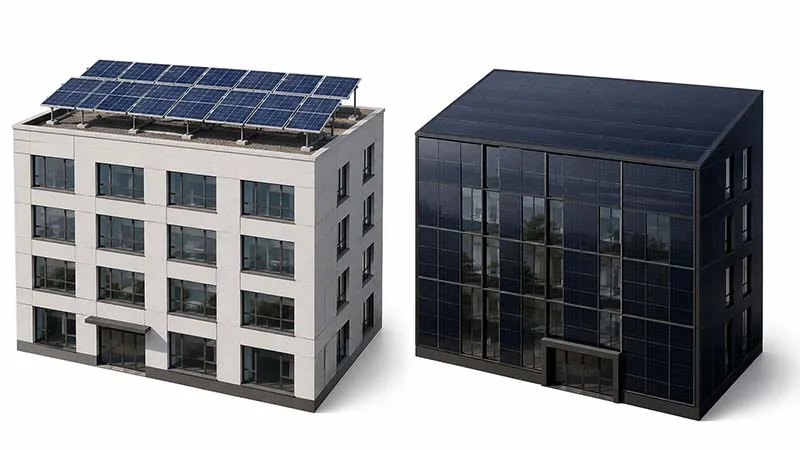
That means a BIPV module should be reviewed across four dimensions:
| Selection Dimension | What to Check | Why It Matters |
|---|---|---|
| Building integration | Facade, roof, curtain wall, skylight, canopy, or carport use | The installation surface affects structure, waterproofing, ventilation, and maintenance access |
| Appearance | Color, texture, transparency, cell visibility, module size | BIPV is visible architecture, not only equipment |
| Technical fit | Module type, glass build-up, load requirements, electrical design, mounting method | A mismatch can delay design approval or installation |
| Commercial readiness | Datasheets, drawings, certifications, warranty terms, packaging, lead time | Buyers need reliable documents before quotation and procurement |
BIPV modules should therefore be selected by application first, then refined by electrical, aesthetic, structural, and commercial requirements.
Start with the Building Surface, Not the Product Catalog
The best BIPV module choice depends on where the module will sit in the building envelope. A facade module, roof module, transparent glass module, and lightweight module may all be photovoltaic products, but they solve different project problems.
Before comparing models, define the surface:
- Vertical facade or cladding area
- Curtain wall or glass facade
- Pitched roof or metal roof
- Low-load roof or retrofit roof
- Skylight, atrium, canopy, or semi-transparent area
- Parking canopy, carport, or shading structure
Each surface creates a different decision path.
For example, facade BIPV modules may need stronger visual customization and facade-system coordination. Roof-integrated modules usually require closer attention to waterproofing, drainage, roof load, and installation sequence. Transparent photovoltaic modules must balance daylight, transparency, privacy, solar control, and power generation.
If the project team starts with the wrong product category, later adjustments can become expensive. Start with the surface, then select the module route.
For product-level options, see the BIPV modules.
Choosing BIPV Modules for Facade Projects
Facade BIPV projects are often design-led. The modules are visible from the street, may cover large vertical areas, and need to coordinate with the building’s architectural language. For commercial buildings, hotels, offices, public buildings, and mixed-use projects, facade modules should be reviewed as both energy products and exterior materials.
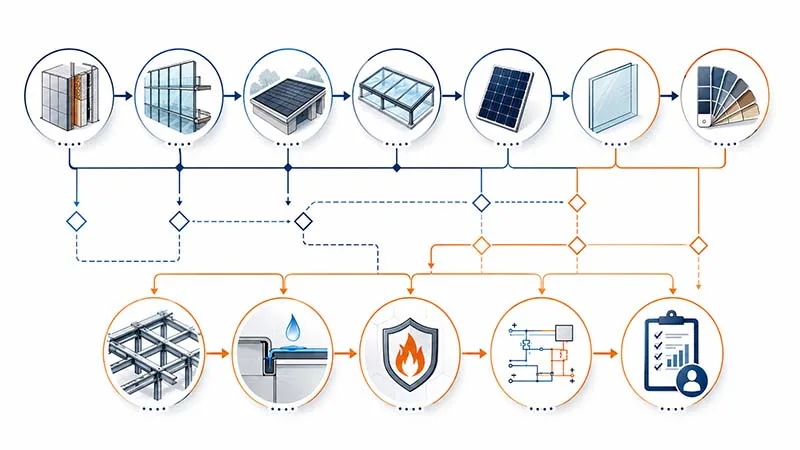
Key facade selection factors include:
- Module color and surface appearance
- Cell visibility and pattern regularity
- Module size and facade grid compatibility
- Mounting system and substructure coordination
- Wind load and structural review requirements
- Ventilation and heat management strategy
- Maintenance and replacement access
- Electrical routing and inverter design coordination
The most common mistake is treating facade BIPV as a simple vertical solar panel installation. In reality, facade modules may need to work with cladding systems, curtain wall systems, waterproofing layers, fire-safety requirements, and architectural detailing.
Facade Module Selection Framework
| Project Question | Recommended Review |
|---|---|
| Is the facade mainly decorative, energy-generating, or both? | Define the commercial and architectural purpose before choosing color or transparency |
| Does the facade grid already exist? | Match module dimensions to the design grid where possible |
| Is visual uniformity important? | Review color consistency, cell visibility, and sample approval |
| Is the facade exposed to strong wind or harsh weather? | Request structural review and project-specific mounting guidance |
| Will modules be difficult to access after installation? | Review maintenance and replacement strategy before procurement |
For facade-led projects, the right BIPV module is usually the one that balances visual control, installation feasibility, and technical documentation, not simply the one with the highest nominal output.
Choosing BIPV Modules for Roof Projects
Roof BIPV projects are usually more sensitive to waterproofing, drainage, structural load, and installation sequencing. A roof-integrated photovoltaic module may be part of a new roof build-up or a retrofit strategy, depending on the project.
Project teams should review:
- Roof type: pitched roof, metal roof, flat roof, or retrofit roof
- Roof load capacity and structural limits
- Waterproofing and drainage details
- Installation sequence with roofing contractors
- Ventilation space and heat management
- Electrical cable routing
- Maintenance access and replacement method
- Compatibility with local roof construction practices
Roof BIPV selection should never rely on module size and power rating alone. If a module route complicates waterproofing or maintenance, it may create more project risk than value.
For roof-focused options, review the BIPV roof system after selecting the basic BIPV module category.
Choosing BIPV Modules for Glass and Transparent Areas
Some building envelope projects need transparency or partial transparency. These may include atriums, skylights, canopies, corridors, glass facades, greenhouses, and architectural shading areas.
Transparent or semi-transparent photovoltaic modules require a different selection logic because they affect both light and energy.
Important questions include:
- How much daylight should pass through the module?
- Is the goal transparency, shading, privacy, or visual effect?
- How visible can the cell pattern be?
- Does the glass area require laminated, insulated, or safety-glass construction?
- Is glare control important for occupants?
- How will the module be cleaned and maintained?
- What documents are needed for glass, safety, and building-envelope review?
Do not choose transparent BIPV only by appearance. The module must also satisfy the project requirements for glass build-up, installation, safety review, and electrical design.
Match Module Type to Buyer Priority
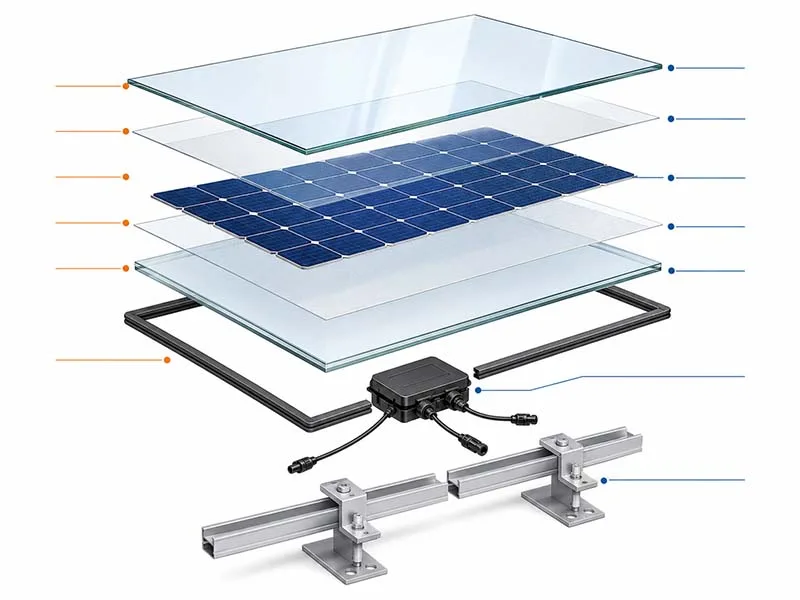
Different project roles care about different things. A good BIPV module recommendation should address the priorities of the people who will approve, buy, install, and maintain the system.
| Buyer Role | Main Concern | What the Article or Supplier Should Provide |
|---|---|---|
| Architect | Appearance, grid alignment, material expression, daylight | Samples, visual options, module size range, design support |
| Developer | Project value, risk control, schedule, commercial confidence | Feasibility review, quotation inputs, warranty overview, case references |
| Facade consultant | Structural fit, mounting, weather performance, replacement logic | Technical drawings, load review inputs, system details |
| EPC contractor | Electrical design, installation sequence, cable routing | Datasheets, wiring guidance, installation coordination |
| Procurement team | Supplier reliability, documentation, packaging, delivery | Certificates, QC process, packaging details, lead-time confirmation |
This is why BIPV module selection should be cross-functional. If only one team chooses the module, another team may discover a problem later.
Review Appearance Before Technical Approval
Because BIPV modules are visible building materials, appearance should be reviewed early. This is especially important for facades, curtain walls, public buildings, hotels, and premium commercial projects.
Appearance review may include:
- Color tone
- Surface texture
- Gloss level
- Cell visibility
- Module edge detail
- Transparency level
- Pattern rhythm across a large surface
- Sample consistency under different lighting
The best practice is to request samples or visual references before final approval. A module that looks acceptable in a small image may feel different when repeated across a large facade.
Check the Technical Documents Before Asking for Final Pricing
Many BIPV quotation delays happen because the project team asks for a price before the supplier has enough project information. To choose the right module and receive a meaningful quotation, prepare the technical inputs early.
Useful inputs include:
- Building type and location
- Application surface: facade, roof, glass, canopy, or other
- Approximate installation area
- Drawings, elevations, or roof plans
- Preferred module size or grid dimensions
- Appearance requirements
- Transparency requirements if relevant
- Structural or load concerns
- Required certificates or test reports
- Target delivery schedule
- Installation responsibility and project role split
If these inputs are not available, the supplier can still provide an initial route recommendation, but the quotation may remain provisional.
For broader route planning, start from the BIPV System overview or review project support through BIPV Solutions.
Compare BIPV Modules with a Project-Fit Matrix
Use this matrix as an early screening tool before narrowing down a product route.
| Project Requirement | Facade BIPV Modules | Roof BIPV Modules | Transparent BIPV Modules | Lightweight BIPV Modules |
|---|---|---|---|---|
| Sample #1 | Strong visual customization | Medium priority | High priority | Medium priority |
| Waterproofing sensitivity | Medium | High | Medium to high | High for roof retrofits |
| Structural load review | High | High | High | High, especially for low-load roofs |
| Daylight requirement | Low unless semi-transparent | Low | High | Low |
| Maintenance access concern | High on tall facades | Medium to high | Medium | Medium |
| Best-fit use case | Commercial facades and cladding | Roof integration and energy surfaces | Skylights, atriums, glass facades | Retrofit and low-load surfaces |
This matrix does not replace engineering review. It helps project teams decide which BIPV module route deserves deeper discussion.
Questions to Ask a BIPV Module Supplier
Before selecting a supplier or final product route, ask practical questions:
- Which BIPV module type fits this surface and building use?
- What module size, color, transparency, and glass build-up options are available?
- Which technical datasheets and drawings can be provided?
- What certificates or test reports are available for the target market?
- What project details are needed before final quotation?
- How should the modules be packaged and shipped for overseas projects?
- What installation guidance or coordination support is available?
- What warranty terms apply, and what conditions affect them?
- How should maintenance and replacement be planned?
- What claims require project-specific verification?
These questions help separate a generic solar-panel supplier from a BIPV supplier that understands building-envelope projects.
Common Mistakes to Avoid
Avoid these mistakes when choosing BIPV modules:
- Choosing modules only by nominal power output
- Ignoring facade grid, roof build-up, or glass-system requirements
- Treating BIPV as an add-on product instead of part of the envelope
- Waiting too long to review waterproofing, wind load, or fire-related requirements
- Using generic solar images or samples to approve a visible architectural surface
- Asking for final pricing without drawings or project conditions
- Assuming one module type fits every facade, roof, and glass application
- Publishing cost, payback, or performance claims without project data
A strong BIPV selection process reduces surprises before procurement and installation.
When Should You Request a BIPV Module Route Review?
Request a BIPV module review when your project has one or more of these conditions:
- The module will be visible on the facade or public-facing roof area
- The project requires color, transparency, or custom appearance
- The building surface has structural or load constraints
- The module may replace or interact with cladding, glass, roofing, or shading materials
- The buyer needs technical documents before quotation
- The project team must compare several BIPV routes before design approval
At this stage, the goal is not only to choose a product. It is to choose a product route that can move through design, engineering review, quotation, procurement, and installation with fewer surprises.
Final Selection Rule: Choose BIPV Modules by Project Fit
The right BIPV module depends on the building surface, visual requirements, technical constraints, documentation needs, and buyer decision stage.
For facade projects, focus on appearance, grid compatibility, mounting, and replacement access. For roof projects, prioritize waterproofing, load review, drainage, installation sequence, and maintenance. For glass or transparent areas, balance daylight, safety-glass requirements, visibility, and energy generation.
BIPV modules work best when they are selected as building materials with photovoltaic function, not as standard solar panels placed into an architectural project after the main design decisions are already fixed.
If you are comparing BIPV modules for a facade, roof, glass, or building envelope project, explore BIPVSYSTEM BIPV modules or contact the team to discuss your project route.