
BIPV Solutions for Industrial Buildings and Factory Roofs
BIPVSYSTEM provides industrial BIPV solutions for factory roofs, warehouse roofs, logistics centers, industrial parks, and production facilities that need large-area photovoltaic integration with practical roof and site conditions. Our support focuses on roof route selection, load review, waterproofing logic, technical documentation, customization, QC, packaging, and delivery preparation.
Industrial BIPV projects are usually driven by roof area, roof type, structural capacity, maintenance access, energy demand, and project delivery schedule. BIPVSYSTEM helps project teams review suitable roof, carport, lightweight, and selected facade routes before quotation and procurement.
- Review factory roof, warehouse roof, carport, and industrial park BIPV routes
- Support metal roof, low-load roof, and large-area photovoltaic integration
- Provide technical review, customization, QC, packaging, and delivery support
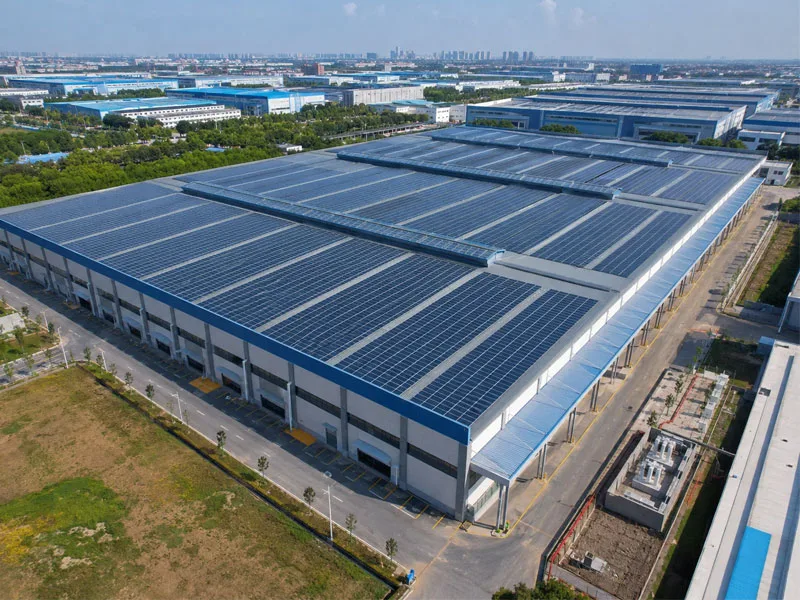
Large Roof Areas
Use factory and warehouse roof surfaces
Industrial Roof Value
Turn roof space into power generation value
Factory & Park Routes
Roof, carport, facade and park applications
Technical Project Review
Load, waterproofing, access and delivery review
How BIPV Fits Industrial Buildings and Factory Roofs
Industrial BIPV projects are usually reviewed from practical site conditions rather than appearance alone. Large roof areas, metal roof systems, roof load, waterproofing strategy, drainage layout, maintenance access, and energy demand all affect which BIPV route should be selected.
For factories, warehouses, logistics centers, and industrial parks, the right BIPV solution should connect roof integration, durability, power generation value, installation feasibility, and long-term operation. BIPVSYSTEM reviews these factors before recommending roof, carport, lightweight, facade, or specialty BIPV routes.
A successful industrial BIPV system should be reviewed as part of the roof or site infrastructure, not as a generic solar product added after the building operation is already defined.
1. Not Just Product Supply
Industrial BIPV is not only about covering roof space with panels. It must also consider load capacity, waterproofing, maintenance access, installation sequence, and long-term operation.
2. Project Route Matching
We help match industrial roof, metal roof, solar carport, lightweight panel, and selected facade routes to the real site conditions of factories, warehouses, and industrial parks.
3. Technical and Delivery Support
We support technical documentation, customization review, QC communication, packaging preparation, and delivery coordination for industrial BIPV projects.
Key Stakeholders in Industrial BIPV Projects
Industrial BIPV projects are usually reviewed by multiple teams before final route confirmation. Owners, developers, EPC contractors, and facility teams each focus on different priorities, including roof value, energy demand, installation access, procurement timing, maintenance planning, and long-term operation.
Factory Owners
Review roof value, energy demand, long-term operation, maintenance access, and facility sustainability goals.
Industrial Developers
Review industrial park positioning, project investment logic, site-level energy planning, and multi-building BIPV routes.
EPC Contractors
Review roof conditions, technical files, installation logic, procurement planning, and delivery coordination.
Facility Teams
Review maintenance access, roof safety, waterproofing concerns, equipment zones, and operational continuity.
From Project Requirement to BIPV System Route
Industrial BIPV route selection should start from the site condition. A factory roof, logistics warehouse, industrial park, parking area, and production facility may require different photovoltaic integration routes depending on roof type, load capacity, waterproofing strategy, installation access, and energy generation goals.
Industrial Facade Route
For industrial office buildings, park entrances, and visible facade zones where photovoltaic integration can support both appearance and energy value.
Roof and Metal Roof Route
For factory roofs, warehouse roofs, metal BIPV roof systems, and large roof areas that can support industrial-scale photovoltaic generation.
Glass and Transparent Route
For skylights, atriums, canopies, corridors, and daylight areas in industrial parks where transparency and power generation need to be balanced.
Carport and Specialty Route
Carport and Specialty Route For parking lots, logistics zones, covered walkways, low-load roofs, curved surfaces, and other industrial site applications.
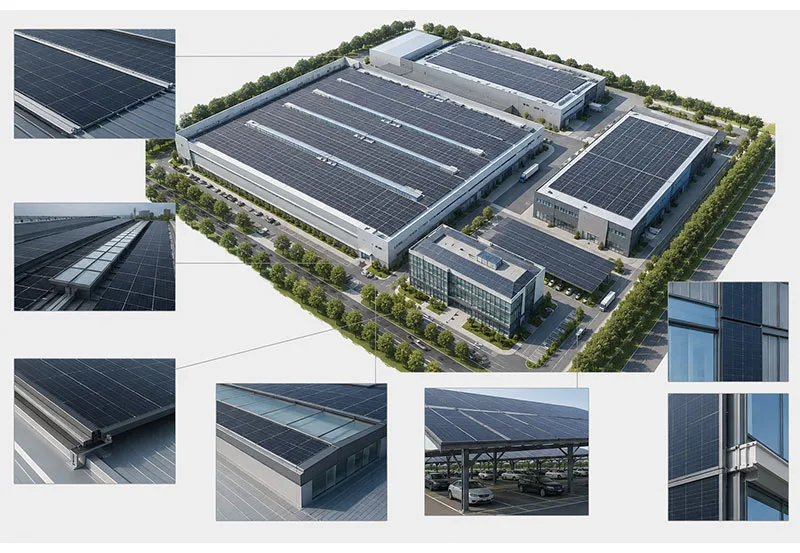
Industrial Building BIPV Project Workflow
Industrial BIPV projects normally require coordination between site review, roof condition analysis, route selection, technical documentation, production planning, QC, packaging, and delivery preparation. Early communication helps reduce project uncertainty and improves quotation accuracy.
Site Review
Review building type, roof areas, roof structure, site location, available drawings, and industrial energy-use goals.
Route Selection
Select suitable industrial BIPV routes such as metal roof integration, factory roof systems, solar carports, lightweight panels, or selected facade routes.
Technical Design Review
Review roof load, waterproofing, drainage, wind conditions, maintenance access, installation sequence, and module layout.
Documentation and Quotation
Prepare technical files, reference parameters, customization scope, drawings review, and quotation inputs.
Production and Delivery
Support production communication, QC inspection, export packaging, container loading, and delivery coordination.·
What BIPVSYSTEM Can Support
As a BIPV system manufacturer, BIPVSYSTEM supports industrial projects from route selection and customization to technical documentation, production communication, QC review, packaging, and delivery preparation. Our goal is to help project teams evaluate suitable BIPV routes for factory roofs, warehouse roofs, industrial parks, carports, and low-load building surfaces.
System Selection
Match the project with suitable industrial BIPV routes based on roof type, site condition, and energy-use goals.
Size Customization
Support project-specific dimensions, layout planning, and module coordination for roof and industrial site applications.
Color and Transparency
Review visual appearance, transparency needs, and glass options for skylights, corridors, canopies, or selected facade areas.·
Technical Files
Provide datasheets, reference parameters, drawings support, and technical communication for industrial project review.
QC and Packaging
Support inspection communication, production review, export packaging, and shipment preparation.
Quotation Support
Prepare quotation based on roof area, route selection, drawings, customization scope, and target market.
Product-to-Solution Support Matrix
Use this matrix to connect industrial project requirements with suitable BIPV routes and supplier support focus. Actual recommendations should still be reviewed according to roof type, load condition, waterproofing strategy, site layout, and project schedule.
| Project Need | Recommended BIPV Route | Support Focus |
|---|---|---|
| Large factory roof | BIPV Roof System / Metal Roof Route | Roof layout, load review, waterproofing, drainage |
| Warehouse or logistics roof | BIPV Roof System | Large-area generation, installation access, maintenance review |
| Industrial parking area | BIPV Solar Carport | Parking layout, structure rhythm, outdoor durability |
| Low-load or curved roof surfaces | Lightweight Solar Panels | Weight sensitivity, surface fit, installation logic |
| Skylight, corridor or canopy zones | Transparent Photovoltaic Panels | Daylight balance, glass structure, transparency review |
| Visible industrial office facade | BIPV Facade System | Facade coordination, appearance, project identity |
Technical Documentation and Project Review Inputs
Industrial BIPV projects usually require early review of roof drawings, roof type, structural load, waterproofing conditions, drainage layout, maintenance access, module dimensions, installation sequence, and delivery requirements. Clear project inputs help BIPVSYSTEM recommend a practical route and prepare a more useful quotation.
| Information Needed | Why It Matters |
|---|---|
| Building type and project location | Helps review climate, market requirements, building use, and project context. |
| Roof type and load condition | Determines whether standard roof, metal roof, or lightweight route is more suitable |
| Drawings and dimensions | Helps review layout, module arrangement, and quotation scope |
| Waterproofing and drainage concerns | Important for roof-integrated and metal roof BIPV applications |
| Maintenance and access requirements | Affects installation planning and long-term operation |
| Project stage and delivery timeline | Helps determine quotation priority, production planning, and shipment coordination |
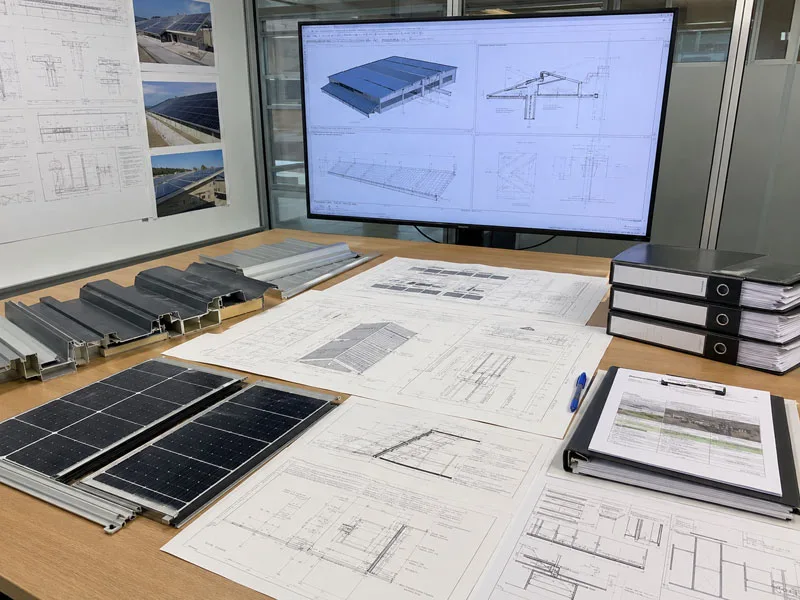
Proof Points for Project Confidence
Industrial BIPV projects require more than product availability. Project teams usually review route feasibility, manufacturing capability, QC process, packaging protection, and delivery coordination before supplier confirmation.
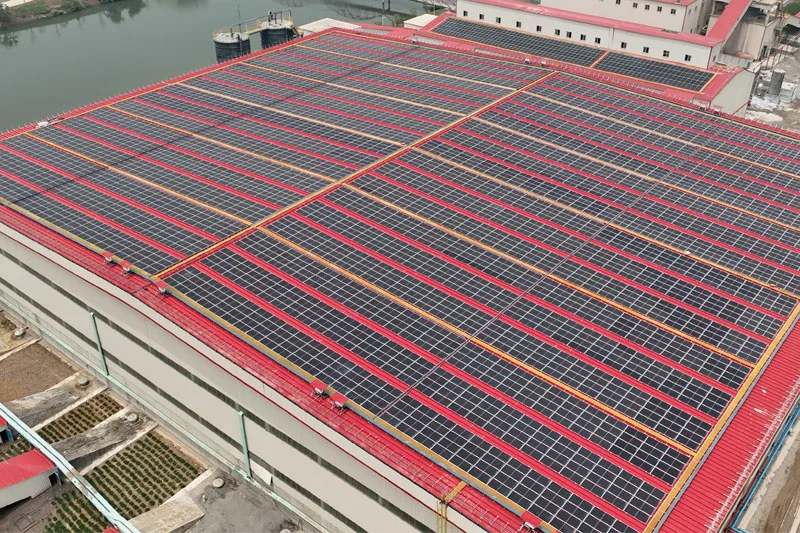
Project Route Proof
Industrial BIPV route examples help project teams understand how roof, carport, lightweight, and selected facade systems can be matched to real site conditions.
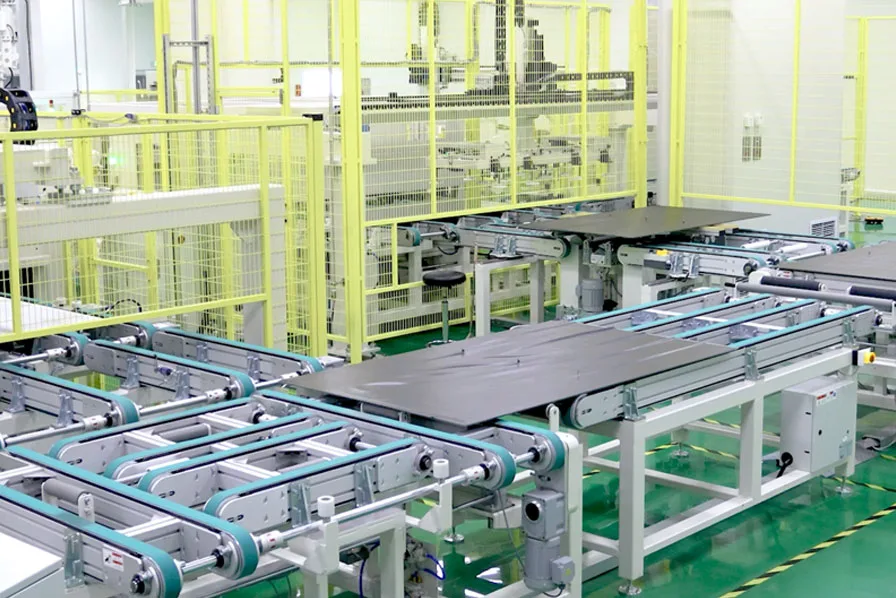
Manufacturing and QC Proof
Factory production, inspection process, and QC communication help reduce uncertainty before industrial BIPV supply.
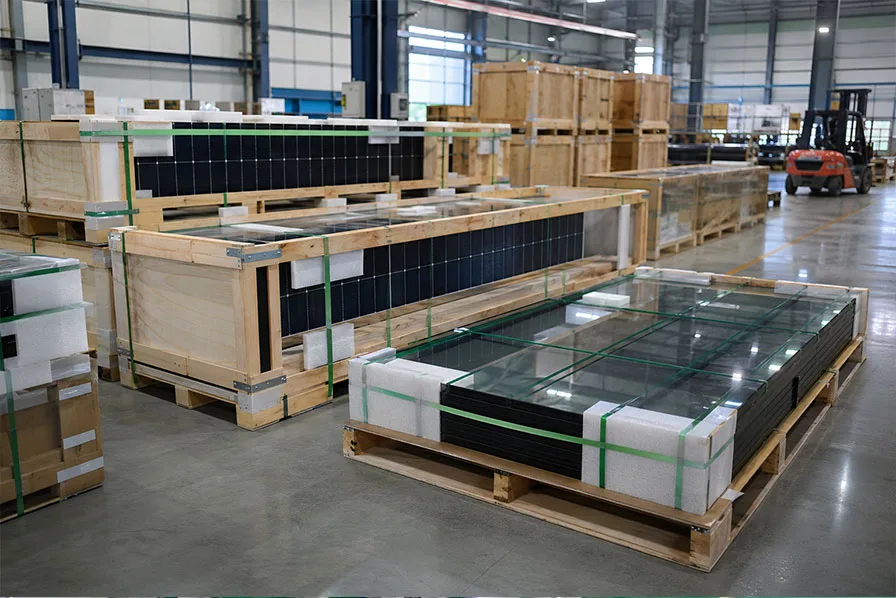
Packaging and Delivery Proof
Export packaging and delivery preparation help protect BIPV modules during transportation and support overseas project supply.
Helpful Resources Before Starting a BIPV Project
These resources help project teams understand industrial BIPV planning, roof integration, system selection, and building-integrated photovoltaic routes before starting a technical review.
Frequently Asked Questions About Industrial Building BIPV
The following questions are commonly raised during industrial BIPV project discussions, especially for factory roofs, warehouse roofs, logistics centers, industrial parks, carport areas, and low-load roof surfaces. These answers help project teams understand how industrial BIPV systems are usually reviewed before quotation and procurement.
How early should industrial BIPV systems be reviewed?
What types of industrial buildings are suitable for BIPV?
Can BIPV systems be used on metal factory roofs?
What information is needed before industrial BIPV quotation?
Are lightweight solar panels suitable for industrial roofs?
Does BIPVSYSTEM support overseas industrial BIPV projects?
Send Project Information
Send us your building type, roof area, site drawings, roof structure, application position, and project timeline. Our team will review your industrial BIPV project and recommend suitable roof, carport, lightweight, or specialty system routes for technical discussion and quotation.