
BIPV Roof System for Pitched, Metal and Commercial Roof Projects
BIPVSYSTEM provides BIPV roof system for projects that require the roof to serve as both a building envelope and a power-generating surface. Instead of adding conventional PV modules on top of an existing roof, our roof-integrated solutions are designed to combine weather protection, structural compatibility, visual consistency, and photovoltaic performance in one coordinated system.
Our BIPV roof solutions are suitable for pitched roofs, metal roofs, industrial buildings, commercial facilities, and architectural projects that require long-term roofing value together with on-site solar generation. Whether the project starts from roof type, appearance requirements, or technical integration needs, we help match the right route for the application.
- BIPV roof tile and metal roofing routes for different roof types
- CE TÜV CQC ISO9001
- Designed for roof integration, waterproofing logic, and long-term durability
- Project-based support for technical review, route selection, and quotation
Why Choose a BIPV Roof System
BIPV roof system is the right choice when the roof is expected to do more than provide basic weather protection. In many commercial and architectural projects, the roof also needs to contribute to energy generation, visual consistency, and long-term building value. This is where a roof-integrated photovoltaic solution becomes more suitable than a conventional add-on rooftop PV system.
Compared with standard rack-mounted PV, a BIPV roof route is evaluated as part of the roof itself. Roof type, drainage behavior, waterproofing, structural load path, installation logic, and maintenance access all become part of the system decision. That is why roof projects need a solution that is developed from the roofing condition first, not only from the solar side.
At BIPVSYSTEM, we supply roof routes that are built around real project conditions, especially pitched roof tile solutions and metal roof integration routes. This allows project teams to choose a roof system based on how the building is actually designed, built, and operated.
💡 Why Project Teams Consider This Route
BIPV roof system is not just a power product placed on top of a roof. It is a roof-integrated solution where roofing performance, waterproofing logic, structural fit, and photovoltaic function are reviewed together.
Integrated Roof Logic
The photovoltaic function is built into the roof route itself, helping the roof serve as both an envelope layer and a generation surface.
Different Routes for Different Roof Types
Pitched roof tile systems and industrial metal roof systems solve different project needs and should be selected accordingly.
Higher Building Value
In many projects, the roof route is chosen not only for energy output, but also for appearance, durability, and long-term asset value.
BIPV Roof Routes by Roof Type
BIPVSYSTEM provides different BIPV roof routes because different roofs require different integration methods. In practice, the first decision is usually not whether to use BIPV in general, but which roof route is structurally and commercially more suitable for the project.
Our main roof routes are built around two common project paths: roof tile solutions for pitched and architectural roofs, and metal roofing solutions for industrial, commercial, and large-span buildings. These routes respond to different needs in appearance, waterproofing, profile compatibility, coverage area, and installation logic.
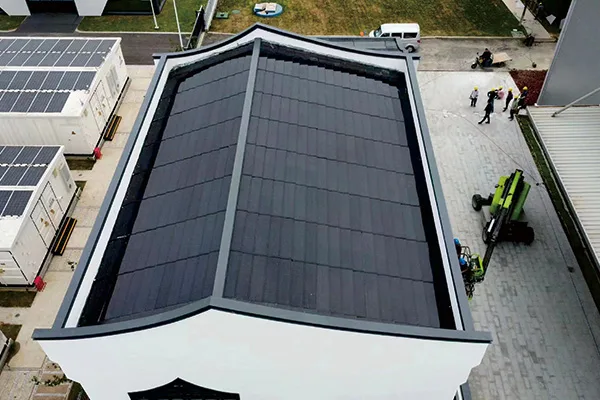
BIPV Roof Tiles
Suitable for pitched roofs, villas, hospitality projects, dormitories, and architectural buildings where roof appearance and integrated design matter together with photovoltaic generation.
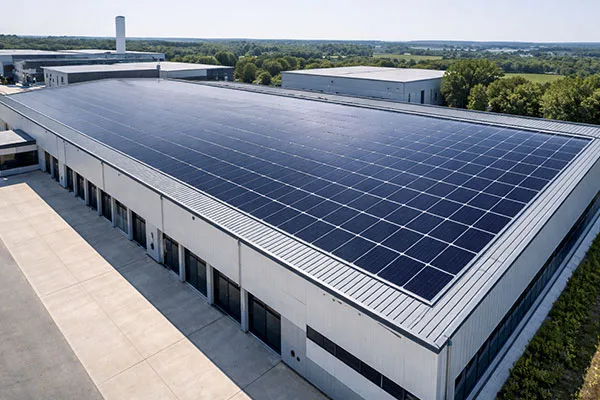
Metal BIPV Roofing
Suitable for factories, warehouses, logistics buildings, and commercial roofing projects where broad roof coverage, waterproofing, and installation efficiency are key priorities.
Roof-Integrated Design
Each route should be reviewed as one roof system, including the weather layer, drainage path, insulation relationship, support conditions, and photovoltaic compatibility.
Project-Based Supply
We support early-stage route matching, technical review, and quotation discussion according to roof type, project use, and target market requirements.
Key Technical Parameters for Roof Tile Projects
For pitched and architectural roof projects, roof tile parameters are often the first step in evaluating whether the route is suitable. The values below provide a practical baseline for early-stage review and help connect roof appearance, installation format, power output, glass structure, and durability expectations.
These parameters are most useful when reviewed together with roof pitch, overlap logic, drainage behavior, roof geometry, and installation conditions. In other words, they should be read as part of a roofing decision, not only as electrical data.
| Parameter | Reference Value |
|---|---|
| Reference Size (L×W×H) | 1592 × 522 × 37 mm |
| Module Weight | 10.5 kg (±0.5) |
| Power | 135 Wp |
| Weight per m² | 12.9 kg/m² |
| Junction Box | IP67 / IP68 |
| Output Cable | 4 mm², 1000 mm |
| Linear Power Warranty | 30 years |
| Cell Type | N-type monocrystalline |
| Front Glass | Ultra-clear heat-strengthened glass |
| Rear Glass | Heat-strengthened glass |
| Static Load | 5400 / 2400 Pa |
| Encapsulation | PVB |
| Product Warranty | 10 years materials & process |
| Frame | 6005-T5 aluminum alloy |
| U-value | 1.3 W/(m²·K) |
| SHGC | 0.26 |
These values are most useful for early-stage route confirmation, especially when the project team needs to judge whether the tile-based roof route fits the roof type, design direction, and installation conditions.
Metal BIPV Roof System Highlights
Our metal BIPV roof route is designed for roof projects where profile compatibility, waterproofing logic, broad coverage, and long-term durability matter more than tile-based aesthetics. This makes it especially suitable for industrial, warehouse, logistics, and large commercial roof applications.
In these projects, the main evaluation factors usually include roof span, usable area, drainage behavior, wind resistance, maintenance access, structural support, and installation efficiency. The metal route should therefore be understood as a full roofing solution rather than simply a solar product for roofs.
Industrial Roof Coverage
Suitable for buildings that require practical large-area roof utilization, including factories, warehouses, and logistics parks.
Profile and Waterproofing Fit
Metal roof projects depend on roof geometry, support path, drainage, and waterproofing coordination rather than module selection alone.
Weather-Resistant Roof Route
Useful for projects where wind load, long-term weather resistance, and operational reliability are critical parts of the roof decision.
Pitched roof tile route
For architectural or design-sensitive roofs where integrated roof appearance matters.
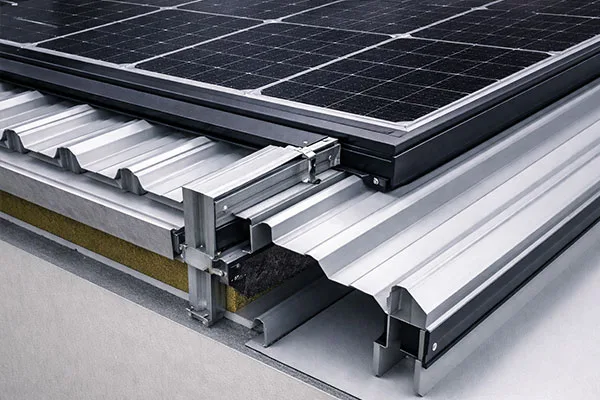
Metal roof route
For industrial and large-area roofs where profile fit and waterproofing logic are critical.
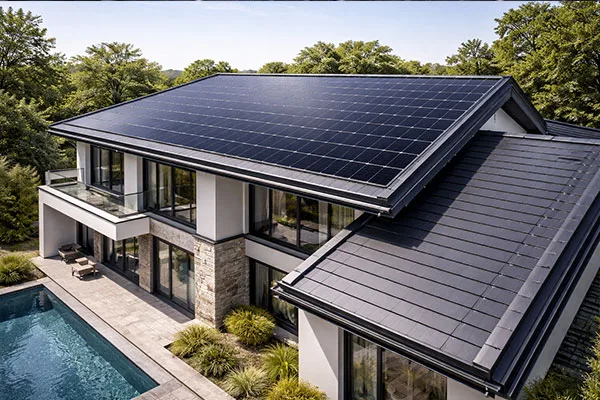
Roof-integrated project route
For projects that evaluate the roof as one building-envelope and generation system.
Typical BIPV Roof Applications
BIPV roof system should be demonstrated through real roof scenarios, not only through technical description. In practice, the strongest application categories are pitched architectural roofs, industrial and commercial large-area roofs, and public or institutional buildings that want integrated energy generation without relying on standard rack-mounted PV.
These application routes help show where BIPV roof systems are used most effectively and how roof type changes the appropriate integration method.
Pitched Roof Building Project
Route: Roof Tile
Fit: Architectural Roof
Suitable for pitched and architectural roof projects where integrated appearance, weather protection, and photovoltaic generation need to work together.
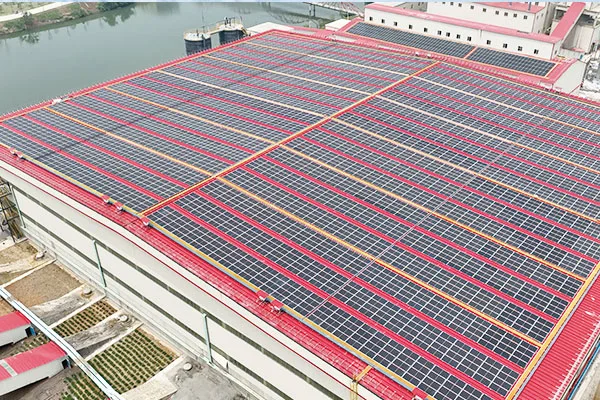
Industrial Metal Roof Project
Route: Metal Roofing
Fit: Industrial Roof
Suitable for large-span industrial and commercial roofs where waterproofing, coverage, installation efficiency, and lifecycle value are major priorities.
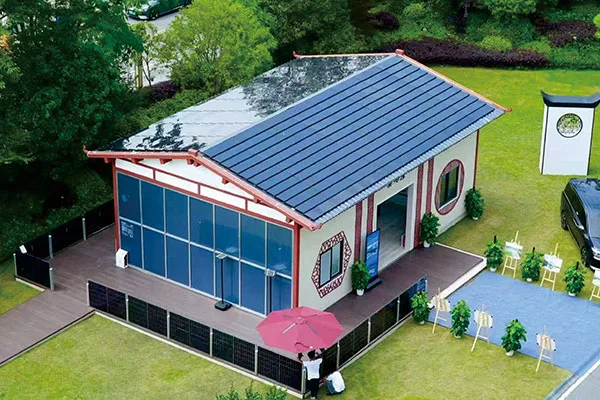
Public or Institutional Roof Project
Route: Roof-Integrated
Fit: Institutional Projects
Suitable for roof-integrated projects that require building-scale power generation together with a coordinated roof design language.
What to Review Before Selecting a BIPV Roof Route
A successful roof project usually begins with practical roof conditions rather than with a generic product discussion. Roof type, span, usable area, waterproofing strategy, drainage logic, and maintenance access often determine the correct route before final product confirmation begins.
1. Confirm Roof Type
Identify whether the project is a pitched roof, metal profile roof, or another specialty roof condition.
2. Review Area and Layout
Check usable roof surface, access conditions, obstructions, and overall roof geometry.
3. Match Product Route
Choose the tile route or metal roofing route according to the roof condition, appearance goals, and building use.
4. Check Waterproofing Logic
Review drainage behavior, sealing details, and the relationship between photovoltaic elements and the roof system.
5. Move to Project Review
Prepare roof drawings, section details, and quantity discussion for route confirmation and quotation.
Frequently Asked Questions About BIPV Roof System
These questions reflect the main concerns that usually appear before a roof-integrated project moves into technical review and quotation. At this stage, the focus is usually route fit, roof type, waterproofing, and project readiness.
What is the difference between BIPV roof tiles and a metal BIPV roof system?
Can the roof route be customized for different roof types?
What information is most useful for a BIPV roof quotation?
Are thermal behavior and waterproofing part of the roof review?
Is a BIPV roof system closer to a roofing product or a standard solar product?
Can a BIPV roof system be reviewed before full construction drawings are ready?
Start Your BIPV Roof Review
Send us your roof type, approximate area, building use, and drawings if available. Our team will review the project and recommend the most suitable BIPV roof route for technical discussion and quotation.
The most useful starting information usually includes roof type, roof structure, approximate usable area, preferred roof appearance if relevant, and any available drawings or section details.