
BIPV Solutions for Developers: Maximize Project Value, Meet Net-Zero Targets, and Win Green Certifications
For developers, BIPV is not only a photovoltaic product. It can support building identity, ESG visibility, green building strategy, tenant perception, and on-site energy generation when it is reviewed early with the building envelope, design team, and project delivery plan.
- Review BIPV routes for commercial buildings, mixed-use projects, hotels, campuses, and public facilities
- Support project positioning, ESG visibility, asset value, and long-term building use
- Provide route selection, customization review, technical documentation, QC, packaging, and delivery support
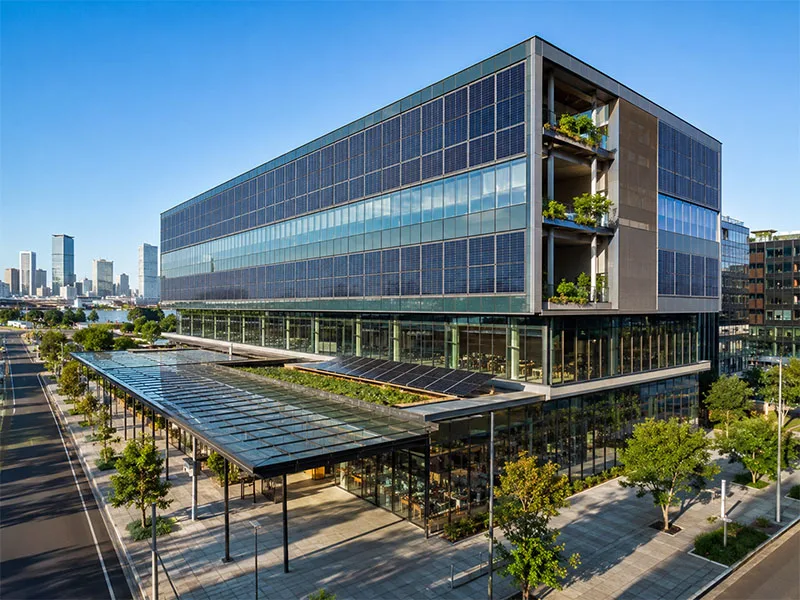
Higher Asset Value
BIPV-integrated buildings command 8–15% higher market valuations and attract ESG-conscious tenants willing to pay premium rents.
ESG & Green Compliance
Meet LEED, BREEAM, and local net-zero mandates with a single integrated system — no retrofit patchwork required.
Proven ROI Framework
Material substitution offsets upfront cost; on-site energy generation delivers long-term returns validated across 100+ developer projects.
End-to-End Decision Support
rom feasibility study to supply chain coordination, our team embeds into your project workflow so nothing falls through the cracks.
How BIPV Supports Developer and Building Owner Decisions
Most developers first encounter BIPV as a sustainability checkbox. The ones who get it right treat it as a value driver embedded from day one of schematic design.
Every developer BIPV evaluation should address three strategic questions: Does it increase sellable or leasable value? Does it reduce lifecycle energy cost to a level that changes the financial model? Does it satisfy the green compliance requirements for this jurisdiction, this asset class, and this buyer profile?
For developers, BIPV should be reviewed as part of the building value strategy, not only as an energy product. The strongest projects usually connect visible sustainability, design coordination, and long-term operation.
Not Just Product Supply
We review BIPV as part of building asset strategy, helping developers understand how facade, roof, glass, or carport routes may support project value.
Project Route Matching
We help match building type, project positioning, roof area, facade visibility, ESG goals, and delivery requirements with suitable BIPV routes.
Technical and Delivery Support
We support documentation, customization review, production communication, QC, packaging, and delivery preparation before procurement.
Who This BIPV Developer Solution Is For
Developer-led BIPV projects usually involve several decision groups before a route is confirmed. Real estate developers, building owners, investment teams, and project managers may focus on different priorities, including asset image, ESG value, cost variables, technical risk, delivery schedule, and long-term building use.
Real Estate Developers
Commercial, mixed-use, and residential developers who want BIPV as a differentiator at pre-sale, planning, or financing stages.
Investment & Asset Managers
Portfolio owners seeking to future-proof assets against tightening energy performance regulations and green lease demands.
EPC Contractors & Project Managers
Teams coordinating complex builds who need a BIPV supplier with documented specs, coordination drawings, and on-call technical support.
Architects & Facade Consultants
·
From Project Value Goals to BIPV System Route
A BIPV system route should be selected according to the project’s value goals and building conditions. A commercial office, hotel, mixed-use development, campus, industrial park, or public facility may require different photovoltaic integration routes depending on visibility, available surface area, design expectations, tenant profile, and project budget direction.
Facade and Curtain Wall Route
For projects where building identity, premium facade appearance, and visible sustainability are important to project positioning.
Roof and Metal Roof Route
For buildings with usable roof areas where developers want to improve on-site energy generation without changing facade expression.
Glass and Transparency Route
For skylights, atriums, canopies, and transparent glass areas where daylight, architectural value, and photovoltaic function must be balanced.
Carport and Specialty Route
For parking areas, campus roads, covered walkways, low-load surfaces, or project-specific areas that can create additional energy value.
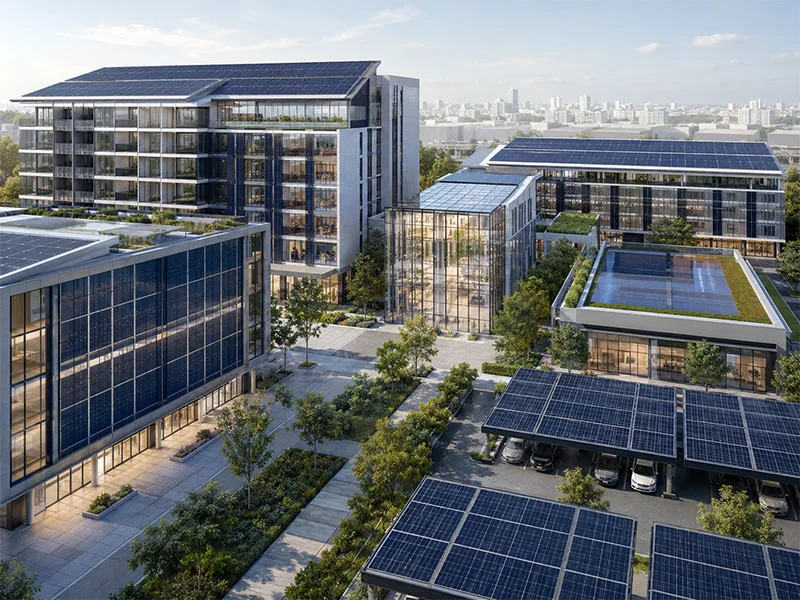
Developer BIPV Project Workflow
Developer-led BIPV projects usually require coordination between project positioning, route selection, design review, technical documentation, procurement planning, and supply preparation. Early communication helps reduce uncertainty before investment decisions, quotation, and delivery planning.
Project Brief & Feasibility·
We review your building type, location, orientation, and regulatory environment to assess BIPV viability before any cost is committed.
System Selection
Facade, rooftop, curtain wall, or specialty — we recommend the system that fits your design intent and financial model.
Concept Integration
Energy yield modeling, cost-benefit analysis, and visual mock-ups delivered for your planning or investment approval stage.
Technical Documentation
Full spec sheets, structural load data, fire compliance docs, and coordination drawings for your design team.
Procurement & Supply
Direct factory sourcing with quality-verified panels, packaging, and delivery timelines coordinated to your build schedule.
On-site & Post-completion Support ·
Installation guidance, commissioning documentation, and long-term performance monitoring options.
What BIPVSYSTEM Can Support
As a BIPV system manufacturer, BIPVSYSTEM supports developer-led projects from early route review to customization, technical documentation, production communication, QC, packaging, and delivery preparation. Our support helps project teams evaluate how BIPV can fit the building’s value strategy and supply requirements.
System Specification
Roof, facade, glazed, and custom BIPV modules matched to your project’s structural, aesthetic, and output requirements.
BIM-Ready Customization
Panel dimensions, color, transparency, and framing configurations output-ready for your BIM workflow and architect review.
Color & Transparency Options
Extensive finish library including colored PV glass and semi-transparent modules — solar performance without visual compromise.
Technical File Package
Datasheet, fire rating, wind load, electrical compliance, and installation manuals provided as a single coordinated document set.
3D Visualization & Packaging
Photorealistic renderings for pre-sale marketing plus precision packaging for damage-free delivery to site.
Dedicated Project Support
A named technical contact throughout your project lifecycle — not a ticket queue.
Product-to-Solution Support Matrix
Not every developer project needs the same BIPV solution. Use the matrix below to identify which system type aligns with your building envelope, design intent, and energy performance target — then request a tailored feasibility review.
| Project Need | Recommended BIPV Route | Support Focus |
|---|---|---|
| Visible green building identity | BIPV Facade System / BIPV Curtain Wall | Facade visibility, asset image, ESG expression |
| Commercial roof energy use | BIPV Roof System | Roof area, energy generation, cost variables |
| Daylight and premium glass areas | Transparent PV / Custom BIPV Glass | Transparency, daylight balance, architectural value |
| Parking or campus energy zones | BIPV Solar Carport | Parking layout, shading, on-site generation |
| Low-load or specialty surfaces | Lightweight Solar Panels· | Surface fit, weight sensitivity, project feasibility |
| Early-stage project evaluation | One-Stop BIPV Solution | Route selection, documentation, quotation preparation |
→ Not sure which route fits your project? Request a free 30-minute Developer BIPV Review.
Technical Documentation and Project Review Inputs
Developer BIPV projects succeed or fail at the documentation stage. Incomplete specs, missing fire ratings, or uncoordinated structural data create costly delays — or force value-engineering at the worst possible moment.
| Information Needed | Why It Matters |
|---|---|
| Building type and project location | Helps review market context, climate conditions, and project positioning |
| Application position | Facade, roof, glass, carport, skylight, or specialty areas require different routes |
| Drawings, dimensions, or estimated area | Helps with layout review, module sizing, and quotation scope |
| Project value goals | Helps clarify ESG visibility, asset image, tenant perception, and long-term use |
| Project stage and procurement timeline | Helps determine whether the next step is concept review, technical support, or quotation |
BIPVSystem provides a complete Technical Input Package for every developer project, including:
- Architectural integration drawings (DWG/BIM compatible)
- Structural and wind load certified data sheets
- Fire classification (EN 13501 / local equivalent)
- Energy yield simulation reports (kWh/year per facade or roof zone)
- Electrical system coordination specs
- Procurement-ready BOQ with lead time confirmed
Proof Points for Project Confidence
Developer-led BIPV projects require confidence before moving into procurement or presenting a route to investors, owners, tenants, or project teams. BIPVSYSTEM supports that confidence through route examples, manufacturing capability, QC process visibility, packaging preparation, and delivery coordination.
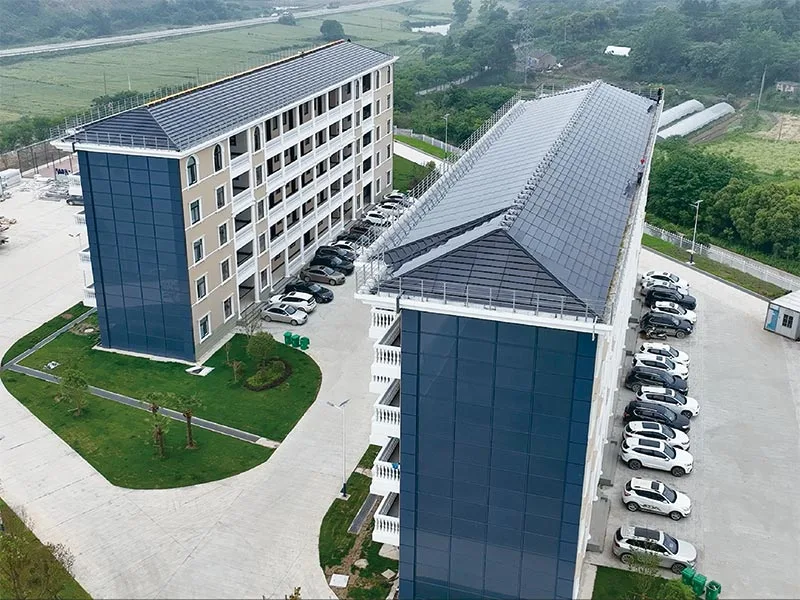
Project Route Proof
Reference projects show how BIPV facade, roof, glass, and carport routes can support real building value and project positioning.
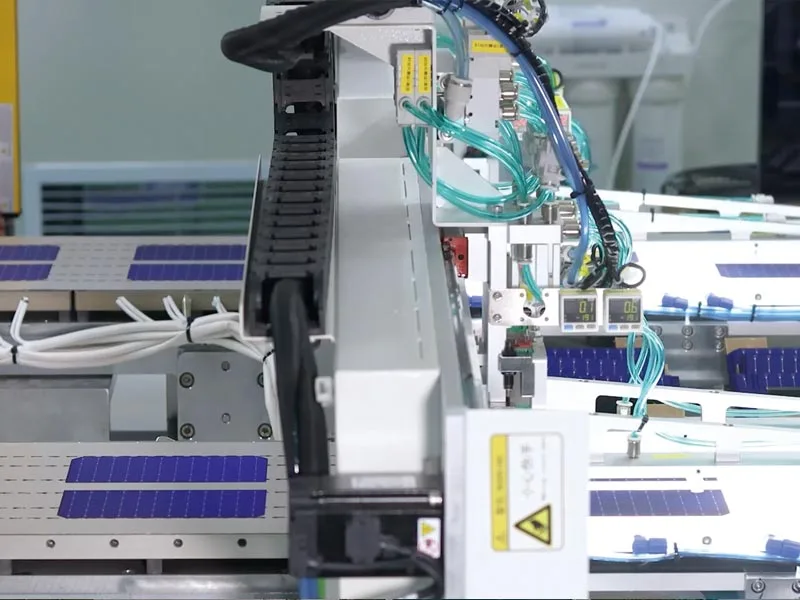
Manufacturing and QC Proof
Factory production, inspection process, and QC communication help reduce supplier uncertainty before procurement.
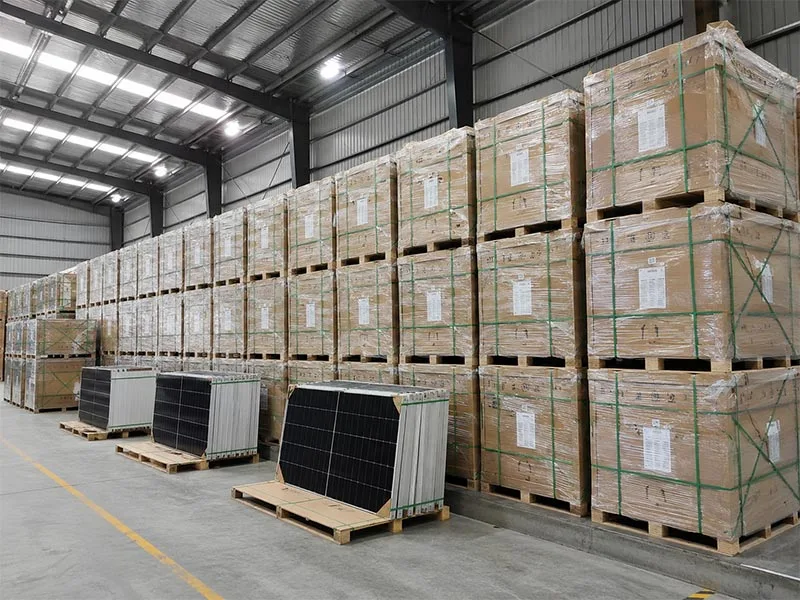
Packaging and Delivery Proof
Export packaging and delivery preparation support overseas BIPV project supply and project schedule planning.
Helpful Resources Before Starting a BIPV Project
These resources help developers and building owners understand BIPV value, route selection, ROI variables, and building-integrated photovoltaic options before starting project review.
Frequently Asked Questions About BIPV for Developers
The following questions reflect common concerns from developers and building owners during early BIPV project evaluation, especially around building value, ESG visibility, system routes, ROI variables, project documentation, and supply coordination.
How can BIPV support developer project value?
Is BIPV suitable for commercial buildings and mixed-use projects?
How should developers compare facade, roof, glass, and carport BIPV routes?
What information is needed before a developer BIPV review?
Can BIPV help support ESG or green building goals?
Does BIPVSYSTEM support overseas developer-led projects?
Start Your Developer BIPV Project Review
Send us your building type, project location, development stage, drawings, application areas, ESG goals, and preferred BIPV route. Our team will review suitable facade, roof, glass, carport, or specialty BIPV options for your project value and supply requirements.