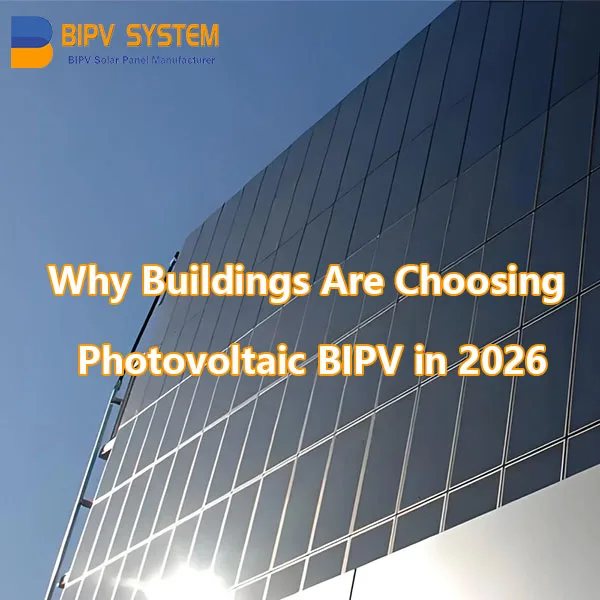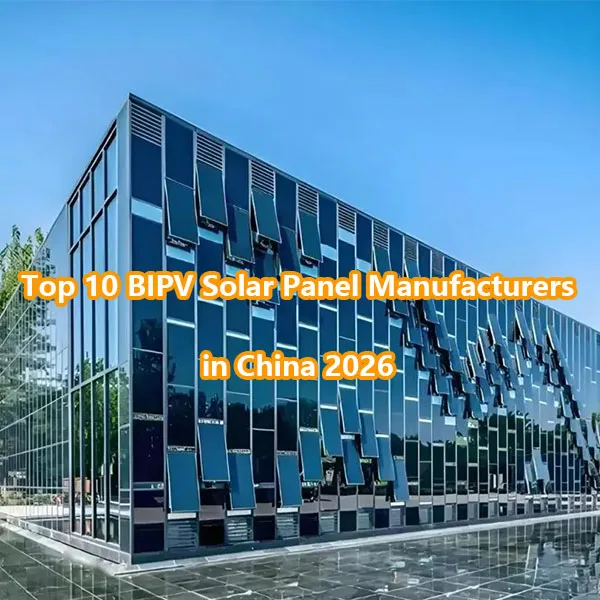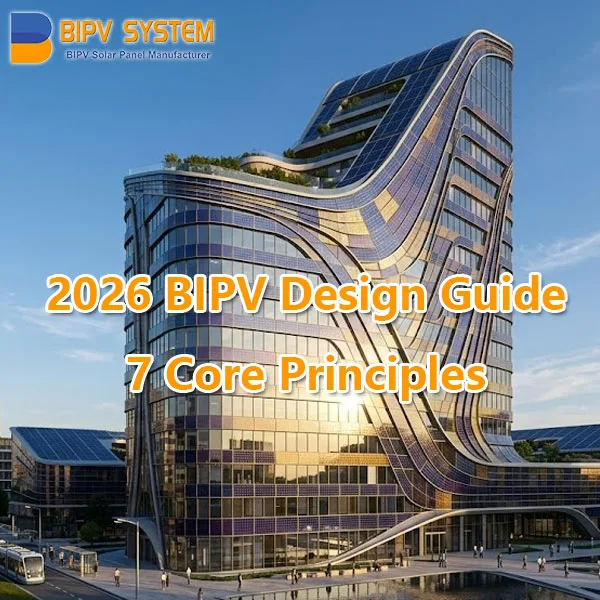
Photovoltaic bipv (building-integrated photovoltaics) is a new class of building material that merges solar power generation with core building functions. The key idea is that PV modules are no longer an “add-on accessory” mounted onto a building—they become part of the building envelope itself (such as curtain wall glazing, roof tiles, or shading systems). This integration gives the material a dual identity: it must deliver physical building performance (weather protection, insulation, fire safety, etc.) while also generating clean electricity through photovoltaic conversion.
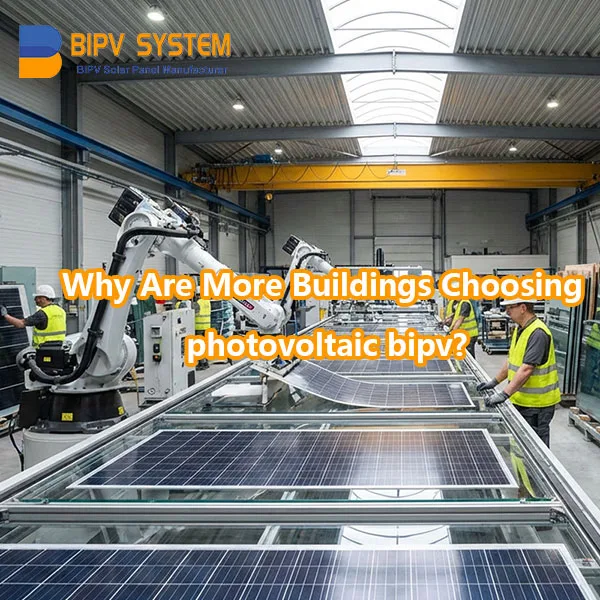
In 2026, as buildings worldwide accelerate toward Zero-Energy transformation, photovoltaic bipv is becoming a strategic solution for developers and architects—thanks to its strong “material substitution” value, zero land use, and deep alignment with modern architectural aesthetics.
Table of Contents
What’s the core motivation for buildings to adopt photovoltaic bipv?
If I had to compress the answer into one line:
Because photovoltaic bipv combines “material cost + energy system” into a single building-envelope solution—enabling on-site generation, aesthetic integration, and reduced dependence on grid transmission/distribution investment, without consuming extra space.
Photovoltaic bipv isn’t “adding solar”—it’s more like a building’s power-generating skin
BIPV can replace or integrate into building skin components, including PV windows, skylights, canopies, balustrades, roof tiles, and facade panels.
Here’s a more visual way to say it:
It’s not about “installing equipment” on a roof—it’s about giving the roof a new skin, and that skin just happens to generate electricity.
And the building envelope already carries serious responsibilities: shelter and safety, solar/thermal control, moisture control, daylighting, fire performance, acoustics, and aesthetics. Those “building attributes” are exactly why photovoltaic bipv offers value far beyond kilowatt-hours.
Why are more buildings seriously considering photovoltaic bipv?
1. Space efficiency: from “limited roof” to “full-skin generation”
Many buildings simply don’t have enough roof area—especially in high-density cities. photovoltaic bipv expands generation surfaces from the roof to facades, curtain walls, canopies, and skylights.
Best-fit scenarios: high-rises, commercial complexes, industrial park façades, and long canopies/walkways in public buildings.
2. Aesthetics & urban acceptance: from “it generates power” to “architects can accept it”
The U.S. Department of Energy (DOE) has discussed BIPV as a space-saving and visually compatible pathway that supports the shift to renewable energy. It also notes that on-site generation can reduce investments in transmission and distribution infrastructure, helping keep energy more affordable.
Honestly, many projects don’t get stuck on budget—they get stuck on aesthetics and approvals. When photovoltaic bipv can truly behave like architectural materials (glass, metal, ceramic panel logic), it fits more naturally into an architect’s design language.
3. “Material cost + energy system” combined: the economic logic is not module price alone
NREL research points out that integrating PV into the building envelope itself (making PV part of the outer layer) can deliver some of the highest cost-saving potential compared with PV “added on top of” the envelope.
Earlier NREL work also noted that when PV functions as a building component (BIPV), costs and benefits can be “shared” between the building side and the energy side—owners can offset cost through reduced electricity purchases or exporting surplus power.
From my own experience: if you compare photovoltaic bipv only against the “module unit price,” it will always look expensive. But if you evaluate it inside a full envelope equation—facade/roof material substitution + installation system + operational risk—the logic becomes much clearer.
4. Energy-system synergy: not only power, but also heat and daylight strategy
photovoltaic bipv is tightly bound to the building envelope, and the envelope sets the upper limit of building energy performance. IEA PVPS Task 15 describes BIPV as a multifunctional building-envelope component (and an energy technology), and its 2024–2027 work focuses on remaining technical, economic, and safety barriers.
Plain language: it’s not a “power plant.” It’s part of the building system—contributing to shading, daylight control, and façade thermal management.
5. Technology is evolving: semi-transparent, bifacial, thin-film expands the use case
A 2024 academic review describes BIPV as a viable renewable pathway and discusses trends like bifacial and semi-transparent technologies.
That’s why photovoltaic bipv is no longer limited to “deep-blue silicon cells.” It’s increasingly behaving like a growing family of architectural materials.
6. The “lack of standards and guidance” is being addressed—delivery is becoming more controllable
In 2025, IEA PVPS released a technical guidebook for BIPV, aiming to close the gap in guidance and standardization by offering best practices and practical tools to support implementation.
I genuinely like this trend: once the industry writes down “how to do it right,” procurement, design, construction, and acceptance don’t have to rely on guesswork.
Which buildings are best suited for photovoltaic bipv?
High-rise buildings in dense cities: limited roof → higher value from facades/curtain walls/shading systems
Industrial plants & campus buildings: large roofs + concentrated load → clear roof-integrated ROI
Public buildings (airports, stations, schools): canopies/walkways/skylights → semi-transparent BIPV balances daylight + power
Luxury homes/villas: sensitive aesthetics and community rules → roof-tile forms, low-visual-impact solutions are easier to approve
Key concerns you may have about BIPV
We’ll be professionally honest with you: BIPV adoption does face challenges—but technology is steadily providing solutions.
Initial cost
Yes, it can be higher than conventional solar. But the building-material substitution value and long-term energy returns can make lifecycle cost competitive. Scale manufacturing and standardized designs are accelerating cost reduction.
System efficiency
BIPV may not always match the “optimal tilt” output of a dedicated solar farm because of installation angle, partial shading, or heat dissipation conditions.
To maximize yield, we typically optimize electrical design (for example, module-level power electronics / MLPE), select more stable cell technologies (such as PERC or heterojunction HJT), and use detailed simulation to improve real-world production.
Standards and codes
The ecosystem is improving. We follow IEC frameworks and local building/electrical codes, and we work closely with design institutes and review authorities to ensure compliance and safety.
Action guide: how to take your first photovoltaic bipv step
Engage early: bring a BIPV consultant into the architectural concept stage and coordinate with architects and structural engineers
Clarify priorities: maximum aesthetics, maximum generation, or a specific transparency target? Your priority drives the right technical route (crystalline silicon vs thin film)
Do a professional assessment: shading analysis, energy yield simulation, and financial modeling using specialized tools
Choose reliable partners: review engineering case evidence, product certifications (e.g., UL, TÜV, CE), and full lifecycle service capability
Why do some photovoltaic bipv projects end up regretting the decision?
The most common regret I’ve seen isn’t “it didn’t generate enough.” It’s this:
Details weren’t defined: edge/termination/corner conditions were improvised → higher leakage risk
Replacement wasn’t designed: one failed module requires removing a big area → O&M cost explodes
Treated like a solar plant layout: facade grid logic ignored → aesthetics damaged, approvals harder
Documentation gaps: no system-level delivery pack → disputes during construction, acceptance, and insurance
If you want to be safer, I recommend writing these into procurement documents:
system-level delivery package + mock-up + contract boundary. This alone can cut risk dramatically.
BIPVSYSTEM’s engineering-driven recommendation
From the factory side, I care most about one thing: can your photovoltaic bipv solution be delivered like a real building material?
I typically recommend this order:
Define the architectural language first (grid rhythm, color/material target, what material you’re replacing)
Define the system route next (facade/roof/glass/canopy, semi-transparent or not, low-glare or not)
Use a mock-up to settle disputes in one shot (details, waterproofing, visual consistency, maintenance path)
If you’d like, we can provide a “project fit checklist”: based on building type, regional regulations, and facade goals, we’ll propose a practical system route and a documentation package list.
FAQ (People Also Ask)
Q1: What’s the difference between photovoltaic bipv and conventional rooftop solar?
photovoltaic bipv integrates PV directly into the building envelope so it becomes both a building material and an energy generator. Conventional rooftop solar is typically mounted on top of the roof as an add-on.
Q2: Why is photovoltaic bipv especially suitable for high-density cities?
Because it expands generation surfaces from the roof to façades, curtain walls, and canopies—solving the roof-area limitation.
Q3: How should we understand the economics of photovoltaic bipv?
Don’t judge by module price alone. Evaluate material substitution cost + installation system + operational risk + avoided electricity purchases / export revenue together.
Q4: What’s the biggest risk when implementing photovoltaic bipv?
Unclear envelope detailing and maintenance replacement strategy—leading to leakage risk or very high repair costs later.
Q5: Is there an authoritative BIPV implementation guide to reference?
Yes. IEA PVPS Task 15 released a BIPV technical guidebook in 2025, offering best practices and practical tools to support implementation.
Q6: Is photovoltaic bipv less efficient than traditional solar panels?
This is a common misunderstanding. While color and texture treatments can cause roughly 10%–15% efficiency reduction, BIPV uses the full building façade and roof surface area. That often enables a much larger total installed capacity than a limited conventional layout—so total energy output can still be higher overall.
At BIPVSYSTEM, we’re not just producing power-generating glass—we’re helping you build something that can self-supply energy while still looking like an architectural work of art.
Are you struggling with façade material decisions for your next project? We can provide a free photovoltaic façade energy estimate—so you’ll know how much electricity cost your building could earn back every year.