I still remember the first time a client asked me, “So… is BIPV just solar panels glued onto buildings?”
I paused for a second—because honestly, that question comes up far more often than it should.
If you are a developer or an architect, you’ve likely heard the term BIPV Technology or the phrase BIPV Basics—yet many still confuse it with traditional solar panels. In this article, we clarify what BIPV Technology truly is and explain the core principles of BIPV Basics.
Table of Contents
What Is BIPV Technology?
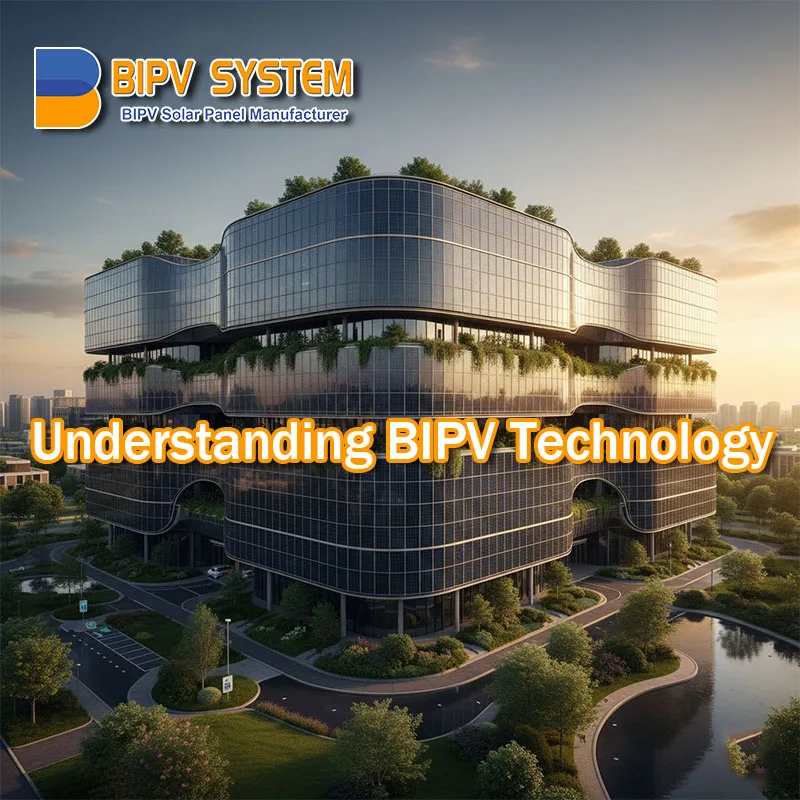
BIPV Technology stands for Building Integrated Photovoltaics, explaining how photovoltaic systems are architecturally integrated “as a part of the building,” not merely mounted on it.
In simple terms, it means photovoltaic systems that are part of the building itself, not something added afterward.
Here’s the key distinction that matters in practice:
Traditional PV systems are installed on buildings
BIPV systems are designed as building materials
That means a BIPV module doesn’t just generate electricity. It also replaces conventional building components.
such as:Roof coverings / Curtain wall panels / Facade cladding / Shading devices or skylights
From an engineering point of view, this changes everything—structural loads, waterproofing, fire safety, thermal behavior, and even architectural aesthetics.
I often explain it this way to non-engineers:
A BIPV module has to behave like a brick, a window, and a power plant at the same time.
How Does BIPV Work?
At its core, BIPV technology still relies on the photovoltaic effect—solar cells convert sunlight into direct current (DC) electricity. That part hasn’t changed.
A crucial element of BIPV Technology is its dual functionality—working both as a building component and as a power generator, making BIPV Basics essential for architects and engineers toward sustainable design.
A Layman’s Explanation: Think of it like the building’s metabolism. Just as your skin protects you from the rain while absorbing Vitamin D from the sun, BIPV protects the building’s interior from the elements while converting light into “food” (electricity) for the building’s HVAC and lighting systems.
The real “magic” happens in the customization. Because it’s a building material, we can adjust the transparency, color, and even the texture. I’ve seen projects where the BIPV facade looked exactly like grey terracotta, yet it was silently powering the elevators inside. It’s a strange, wonderful feeling to realize a wall is “alive” with energy.
A typical BIPV system includes:
BIPV modules
These are customized PV panels designed to meet building requirements (size, transparency, color, strength).
Mounting & integration structures
Instead of simple racks, BIPV uses facade systems, curtain wall frameworks, or roofing assemblies.
Electrical system
DC cabling, inverters, protection devices, and grid connection—similar to traditional PV, but often hidden within the building envelope.
Building interfaces
Waterproofing layers, drainage paths, ventilation gaps, and thermal insulation coordination.
Core Technical Categories of BIPV Systems
Not all BIPV is the same. From a technical and application perspective, BIPV systems are usually classified by where and how they are integrated into the building.
Let’s walk through the most common types.
1. Roof-Integrated BIPV System
Among the main types, Roof-Integrated BIPV Technology represents one of the core components of modern BIPV Basics, replacing conventional roofing materials with power-generating surfaces.
Typical characteristics:
Acts as both weather protection and energy generator
Requires strict waterproofing design
Common in residential, industrial, and commercial roofs
From experience, roof BIPV works best when considered early in the building design stage. Retrofitting is possible, but details matter a lot.
I’ve walked on these roofs, and they feel just as solid as traditional metal roofing. You don’t have to worry about drilling holes into your brand-new roof to mount racks, which—let’s face it—is every homeowner’s nightmare.
2. Facade and Curtain Wall BIPV
This is where the architecture really shines. We replace traditional glass or aluminum panels with PV glass.
Facade BIPV modules are used as:
Curtain wall panels
Cladding elements
Decorative exterior skins
These systems often use glass-glass BIPV modules, sometimes semi-transparent, sometimes opaque.
Translation: It’s like having a solar panel that doesn’t mind a little shade or a bad angle—it’s more “forgiving” than the standard stuff.
A practical note:
Facade BIPV usually generates less energy per square meter than roof systems—but it offers huge surface area and strong visual impact, which is often exactly what architects want.
3. Semi-Transparent BIPV (Windows & Skylights)
Imagine sitting in an atrium where the skylight provides shade and power. By spacing out the solar cells or using semi-transparent coatings, we can control exactly how much light enters the room.
They are commonly used in:
Skylights / Atriums / Canopies / Sunshades
Technically, this involves balancing:
Power output / Light transmission / Thermal performance
The Reflection: There is a specific quality of light that comes through a BIPV skylight—a dappled, soft glow. It changes the mood of a room entirely. It’s not just about saving $500 on a monthly utility bill; it’s about how the space feels.
4. Shading and Functional BIPV Structures
Some BIPV systems are designed primarily as functional architectural elements, such as:
Louvers / Brise-soleil systems / Balcony railings / Parking canopies
These systems often surprise developers because they generate energy without occupying additional building space.
BIPV vs Traditional Solar Panels: The Technical Difference That Matters
From an engineering and decision-making standpoint, the biggest difference is not efficiency—it’s integration responsibility.
| Aspect | Traditional PV | BIPV Technology |
|---|---|---|
| Role in building | Add-on system | Building material |
| Structural function | None | Required |
| Aesthetic control | Limited | High |
| Customization | Low | High |
| Design stage | After architecture | During architecture |
In contrast to traditional PV, BIPV Technology in BIPV Basics positions the PV elements as building materials, affecting structure, aesthetics, and integration.
And yes—this also explains why poorly planned BIPV projects fail.
Why BIPV Basics Matter Before Any Project Decision
I’ve seen projects where BIPV was technically feasible but failed commercially—simply because the decision-makers didn’t fully understand what BIPV technology involves.
Understanding the basics helps you:
Choose the right integration location
Set realistic performance expectations
Avoid conflicts between architecture and engineering
Select a supplier with real system capability, not just PV products
At BIPVSystem, most projects start with questions, not products. That’s usually a good sign.
Why Should You Care Now?
I’ll be blunt: the era of “cheap energy” is over, and the era of “green mandates” is here. Whether it’s the EU’s carbon taxes or local building codes, the pressure is on.
But beyond the regulations, there’s a quiet satisfaction in BIPV. I’ve worked with developers who were initially skeptical about the “payback period.” But when they see the first energy bill after a year of operation, and they realize their building’s facade is essentially a “passive income” generator, the skepticism turns into a smile.
At BIPVSystem, we don’t just sell panels. We’ve spent years figuring out how to make these systems survive 25 years of wind, rain, and heat while looking beautiful. Because at the end of the day, a building isn’t just a machine for living—it’s a part of our landscape.
When exploring BIPV Technology in-depth and mastering the core concepts of BIPV Basics, your building design will gain both aesthetic and energy performance advantages.