If you are searching for the best BIPV Solar Panels Suppliers in China, the real challenge is not finding solar manufacturers. China has plenty of those. The harder task is identifying which companies can support building-integrated photovoltaics as a real roofing, facade, curtain wall, or carport solution rather than treating BIPV as a side category.
That distinction matters because BIPV is not just about module supply. A serious BIPV project sits at the intersection of architecture, building-envelope performance, waterproofing, structural logic, and long-term power generation. In other words, the right supplier is usually the one that can reduce project risk, not simply offer a lower panel price.
This list is an editorial ranking for 2026 based on publicly visible BIPV product lines, solution pages, application breadth, and relevance to real project scenarios. It is not a market-share ranking. Some companies on this list are giant PV manufacturers with visible BIPV business lines. Others are more BIPV-focused solution providers. That mix is intentional, because buyers do not all need the same type of partner.
Table of Contents
What Is BIPV Before Choosing a BIPV Solar Panels Supplier?
BIPV stands for building-integrated photovoltaics. Unlike conventional PV systems that are mounted onto an existing building surface, BIPV products are designed to become part of the building itself. Depending on the system, they can be used in roofs, facades, curtain walls, canopies, or carports while also generating electricity. LONGi, Trinasolar and BIPVSYSTEM all describe BIPV in this integrated building-and-energy direction in their official materials.
What Is BIPV Before Choosing a Supplier?
I used four filters:
- The company must have publicly visible BIPV products, BIPV solution pages, or official BIPV project references.
- The company must show relevance to real building applications such as roofs, facades, curtain walls, or solar carports.
- The company must show some level of building-integration thinking, not just generic PV sales language.
- The company must be useful to the real decision-makers in BIPV projects: developers, architects, design institutes, industrial owners, EPCs, and green-building investors.
Why BIPV Is Getting More Attention in 2026
The strongest BIPV applications are usually the ones where building-material replacement and electricity generation overlap in a practical way.
Industrial and Commercial Roofs
This is still one of the most scalable BIPV applications. Large roof areas make it easier to justify integrated weatherproofing and distributed power generation together.
Facades and Curtain Walls
Facade BIPV makes sense when the project already needs premium cladding or curtain wall solutions and the owner wants the building skin to become an energy asset instead of a passive material.
Solar Carports
Carports are often easier to commercialize because the structure already needs a covering element. BIPV can turn that surface into a weather-resistant, power-generating canopy.
Public Buildings and Green Building Projects
BIPV is also attractive in schools, campuses, office parks, civic buildings, and sustainability-led developments where visibility, long-term energy value, and architectural consistency all matter.
Top 10 BIPV Solar Panels Suppliers in China 2026
1. LONGi
Website: longi.com
Main products: BIPV roof products such as Hi ROOF S, Hi ROOF E, ROOF 5, and BRIGHT 3, alongside broader solar PV solutions.
LONGi is one of the most visible Chinese solar manufacturers with a clear BIPV direction. It is especially relevant for buyers who want a large-scale supplier with strong market recognition and a more developed BIPV product narrative.
LONGi is generally a strong fit for industrial and commercial roof-oriented BIPV projects, especially when procurement confidence and large-supplier credibility matter.
Pros
- Strong global brand recognition and procurement confidence.
- Dedicated BIPV product line visible on the official site
- Clear fit for industrial and commercial roof projects.
Cons
- Public-facing BIPV communication is stronger on the roof side than on facade-led architectural customization. This is an editorial assessment based on the current product presentation.
- For highly customized facade or curtain-wall projects, some buyers may want a more envelope-specialized partner. This is an editorial assessment grounded in the product mix shown publicly.
2. Trina Solar
Website: trinasolar.com
Main products: BIPV product solutions, customizable BIPV products, green building design and consulting, and BIPV system solutions. Official project references also show photovoltaic facades, roofs, canopies, and corridors.
Trinasolar stands out because it presents BIPV more as a structured business line than many mainstream PV manufacturers do. Its BIPV subsidiary page explicitly includes design consulting, product solutions, and system solutions. Its public project references also show facade, roof, canopy, and corridor applications, which makes Trina relevant not only for module supply but also for integrated project thinking.
Pros
- Clear BIPV business structure, not just isolated product mentions.
- Stronger consulting-and-systems posture than many pure module suppliers.
- Good fit for developers, design institutes, and office/campus-style projects. Editorial assessment supported by Trina’s published BIPV project mix.
Cons
- For smaller buyers, the brand may feel more “large enterprise system supplier” than niche customized BIPV partner. This is an editorial judgment.
- Public product navigation is less simple than highly focused BIPV-only brands, which may make first-pass comparison slower. Editorial assessment.
3. Risen Energy
Website: en.risenenergy.com
Main products: Solar modules, energy solutions, BIPV-related project/business content, and smart car shed / BIPV application content. The company also highlights lab and testing capability.
Risen Energy is a strong inclusion because it combines mainstream manufacturer scale with visible BIPV-related activity. It is not the most facade-specialized brand on this list, but it does show BIPV applications publicly and has a stronger engineering/testing flavor than many smaller suppliers. That can matter for buyers who care about technical rigor and long-term supplier stability.
Pros
- Established Chinese energy company with broad product capability.
- More engineering-oriented presentation than many trading-style suppliers.
- Relevant for carport and commercial/industrial deployment scenarios. Editorial assessment based on visible BIPV application direction.
Cons
- Public BIPV positioning is less central and less detailed than Trina, LONGi, or BIPVSYSTEM. Editorial assessment.
- Buyers seeking a strongly architecture-led BIPV narrative may need more direct technical discussion during pre-sales. Editorial assessment.
4. BIPVSYSTEM
Website: bipvsystem.com
Main products: BIPV Roof System, BIPV Facade System, BIPV Solar Carport, and BIPV project/case content.
BIPVSYSTEM earns the No. 4 position because it is much more focused on BIPV as a building category rather than PV as a general product category. Its site structure is already aligned with the three most commercially relevant BIPV scenarios: roof, facade, and carport. That makes it easier for specifiers and owners to evaluate by application instead of by abstract product claims.
Its most important strategic advantage is how it frames BIPV as a dual-function building material. The facade page explicitly positions the system as a replacement for conventional non-productive exterior materials, while the roof and carport pages emphasize waterproof structural integration. For projects where the investment logic depends on both material replacement and power generation, that is the right commercial narrative.
That matters because buyers do not evaluate BIPV in the abstract. They evaluate it by building use case.
Pros
- Strong BIPV-only focus rather than generic PV branding.
- Clear product architecture by application: roof, facade, carport.
- Strong fit for buyers who care about material replacement, facade integration, and weather-exposed applications. Editorial assessment supported by site positioning.
Cons
- Brand scale and global recognition are not as strong as the largest mainstream PV manufacturers. Editorial assessment.
- Buyers who prioritize very large global bankability signaling may still shortlist bigger Tier-1-style module names first. Editorial assessment.
5. JinkoSolar
Website: jinkosolar.com
Main products: Jingcai BIPV series, photovoltaic curtain wall products, rooftop BIPV products, and project references such as BIPV carports and building applications.
JinkoSolar is one of the best-known Chinese solar brands globally. While it is more widely recognized for mainstream PV manufacturing, it is still relevant in BIPV discussions because it has shown building-related solar applications and is often attractive to buyers who prioritize procurement familiarity.
Pros
- Very strong global brand familiarity.
- Publicly visible BIPV product categories including curtain wall products.
- Useful for buyers who want mainstream PV credibility plus BIPV options. Editorial assessment.
Pros
- Public BIPV communication is still less building-envelope-focused than more specialized BIPV brands. Editorial assessment.
- Some projects may require more custom technical coordination than a large mainstream PV procurement flow naturally offers. Editorial assessment.
6. Gain Solar
Website: gainsolarbipv.com
Main products: Solar tiles, solar floor panels, and other BIPV green materials. Gain Solar describes itself as a BIPV solution provider and a subsidiary of Yingli Group.
Gain Solar is more BIPV-specialized than many mainstream PV suppliers, which makes it useful in this ranking. It is often more relevant when the project requires a supplier that communicates directly around BIPV products and building integration rather than treating BIPV as a side category.
Pros
- More specialized BIPV identity than most mainstream module makers.
- Product range includes non-standard BIPV forms such as solar tiles and floor panels.
- Useful for green-building or design-differentiated projects. Editorial assessment.
Cons
- Lower international procurement familiarity than the biggest Chinese PV brands. Editorial assessment.
- Public case visibility and global project signaling appear lighter than the largest PV manufacturers. Editorial assessment.
7. GCL SI
Website: en.gclsi.com
Main products: PV modules, energy storage, integrated energy systems, and publicly visible BIPV-related product/news content including BIPV module and BIPV curtain-wall references.
GCL SI is a recognizable Chinese solar name with visible BIPV-related activity. It is not always the first company mentioned in BIPV discussions, but it is still worth including because it sits at the intersection of large-scale solar capability and integrated product development.
Pros
- Strong corporate scale and integrated-energy positioning.
- Public evidence of BIPV-related product development.
- Useful for buyers who prefer larger enterprise backing. Editorial assessment.
Cons
- BIPV is not as clearly front-and-center in the public product architecture as with BIPV-focused brands. Editorial assessment.
- May be more attractive for broader C&I or energy-system buyers than facade-led architectural specifiers. Editorial assessment.
8. JA Solar
Website: jasolar.com
Main products: Mainstream PV modules and public references to BIPV systems including roofing, curtain walls, corridors, and carports in ESG reporting. JA Solar also notes that BIPV products can meet building safety, aesthetics, and design requirements.
JA Solar is another well-known Chinese PV manufacturer that deserves mention because of its relevance to broader building-related and integrated solar applications. It is less of a pure BIPV specialist, but still worth considering for projects where supplier scale and brand confidence weigh heavily in procurement.
Pros
- Strong global PV reputation.
- Public references to BIPV roofing, curtain wall, corridor, and carport applications.
- Useful where procurement confidence matters heavily. Editorial assessment.
Cons
- Public BIPV positioning is less dedicated than companies with standalone BIPV business pages. Editorial assessment.
- Buyers may need deeper project-level discussion to confirm facade/roof system fit. Editorial assessment.
9. Solar First
Website: esolarfirst.com
Main products: BIPV solutions, BIPV roof products, solar module mounting structures, and project references such as a 3MWp BIPV roof project.
Solar First is more solution-oriented than many module brands, which makes it relevant in BIPV. Its official site includes a dedicated BIPV solution category and BIPV roof products that emphasize windproof, snowproof, and waterproof functions. It also publishes specific BIPV project references. That makes it especially interesting for buyers who understand that BIPV success often depends on structure and mounting logic as much as on the PV component itself.
Pros
- Stronger structural/mounting orientation than pure module vendors.
- Public BIPV project references available.
- Good fit for roof-heavy projects where installation logic is critical. Editorial assessment.
Cons
- Less globally recognized than the biggest Tier-1-style module brands. Editorial assessment.
- Public presentation is more system/structure-oriented than facade-material-brand-oriented. Editorial assessment.
10. Antaisolar
Website: antaisolar.com
Main products: Solar mounting systems, roof systems including BIPV, and BIPV-related manufacturing and upgraded BIPV solutions referenced in official materials.
Antaisolar rounds out this list because BIPV is not only a module decision. In many projects, structural design, waterproofing, and attachment strategy are what determine whether the system works in practice. Antaisolar’s site explicitly includes BIPV in its roof solutions, and its ESG and corporate materials reference upgraded BIPV solutions and BIPV-related production capacity.
Pros
- Strong structural and mounting expertise.
- Relevant for roof systems where support design matters as much as the module. Editorial assessment.
- Useful for buyers who evaluate BIPV as an assembly, not just a panel. Editorial assessment.
Cons
- Less of a classic “module brand” than companies like LONGi, Trina, Jinko, or JA Solar. Editorial assessment
- Buyers looking for facade-glass or solar-curtain-wall branding may prioritize other suppliers first. Editorial assessment.
Summary Table: Top 10 BIPV Solar Panels Suppliers in China 2026
| Supplier | Main BIPV / Related Products | Best Fit | Key Pros | Key Cons |
|---|---|---|---|---|
| LONGi | Hi ROOF S, Hi ROOF E, ROOF 5, BRIGHT 3 | Industrial & commercial roofs | Strong brand, visible BIPV line, roof focus | Less facade-specialized publicly |
| Trinasolar | BIPV product solutions, customized BIPV, facades, roofs, canopies | Office, campus, developer-led projects | Clear BIPV business line, consulting + systems | More enterprise-style than niche-specialist |
| Risen Energy | Solar modules, BIPV-related applications, smart car shed direction | C&I and carport-related projects | Engineering-oriented image, established company | BIPV less central in public messaging |
| BIPVSYSTEM | BIPV Roof System, BIPV Facade System, BIPV Solar Carport | Roof, facade, carport, material-replacement projects | Focused BIPV positioning, clear application structure | Smaller global brand signal than major PV giants |
| JinkoSolar | Jingcai BIPV series, PV curtain wall products, BIPV carport | Procurement-led projects needing major brand comfort | Procurement-led projects needing major brand comfort | Less specialized building-envelope narrative |
| Gain Solar | Solar tiles, solar floor panels, BIPV green materials | Green building and differentiated BIPV projects | More category-specific BIPV identity | Lower global familiarity |
| GCL SI | PV modules, integrated energy systems, BIPV-related products/news | Large-enterprise buyers, C&I energy projects | Strong corporate scale, visible BIPV development | BIPV not as front-facing |
| JA Solar | Mainstream PV modules with BIPV roofing/curtain wall references | Buyers preferring mainstream brand strength | Strong reputation, public BIPV references | Less dedicated BIPV product architecture |
| Solar First | BIPV solutions, BIPV roof products, mounting systems | Roof-heavy projects, structure-led integration | Strong system and mounting logic | Lower global brand recognition |
| Antaisolar | Roof systems including BIPV, mounting structures, BIPV upgrades | Roof assemblies and structurally demanding applications | Strong structure/mounting relevance | Less facade-glass-oriented branding |
Final Take
If your project is mainly about supplier scale, procurement comfort, and bankable mainstream solar manufacturing, the first names to shortlist are LONGi, Trinasolar, JinkoSolar, JA Solar, and possibly GCL SI.
If your project is more about true building integration, especially in roofs, facades, curtain walls, and solar carports, then focused or system-oriented names such as BIPVSYSTEM, Gain Solar, Solar First, and Antaisolar become much more strategically relevant.
The most important principle is simple: do not choose a BIPV supplier the same way you would choose an ordinary solar panel vendor. In BIPV, building-envelope logic, waterproofing, structural fit, and long-term project value matter just as much as module supply.
How to Choose the Right BIPV Supplie
This is where most top-list articles stay too shallow.
The best BIPV supplier is not automatically the biggest one, the cheapest one, or the most famous one. It is the supplier that best matches the technical and commercial logic of your project.
1. Start With the Application Scenario
Before comparing suppliers, define whether your project is mainly about:
- industrial roof BIPV
- commercial building BIPV
- facade or curtain wall BIPV
- solar carport integration
- architectural showcase buildings
- low-carbon campus or industrial park deployment
A supplier that is strong in roof systems may not be the right choice for facade integration. A supplier that is good at mainstream modules may not be the best partner for dual-function building-material replacement.
2. Evaluate Whether the Supplier Understands Building Logic
A serious BIPV supplier should be able to discuss more than wattage, efficiency, and price.
They should also be able to discuss:
- waterproofing logic
- structural attachment
- fire and safety considerations
- wind resistance
- installation coordination
- facade or roof compatibility
- long-term maintenance logic
If the conversation never gets beyond module specs, you are probably still looking at a PV supplier, not a strong BIPV partner.
3. Compare Based on What the System Replaces
This is one of the most important commercial questions in BIPV.
If the system replaces roofing, facade cladding, curtain wall infill, or canopy materials, then the economics need to be evaluated differently. The comparison is no longer just BIPV versus ordinary solar panels. It becomes:
BIPV system vs. conventional building material + separate PV system + long-term coordination cost
That is where focused suppliers like BIPVSYSTEM become more relevant, because their positioning is already built around this dual-function replacement logic.
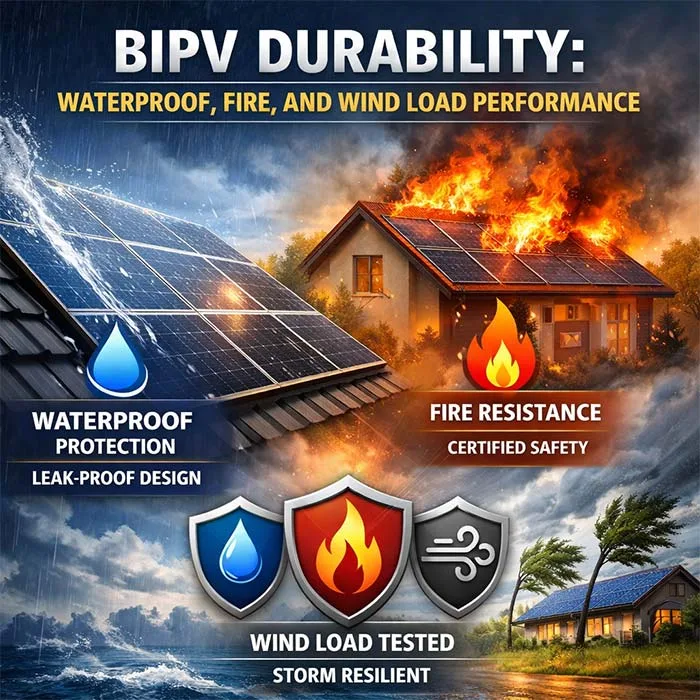
4. Check Whether the Supplier Fits Harsh-Weather or High-Exposure Projects
In many projects, especially industrial parks, coastal areas, large commercial roofs, and exposed parking structures, durability is not optional.
Ask whether the supplier can credibly support discussions around:
- waterproof performance
- fire behavior
- wind load
- long-term structural reliability
- envelope durability
This matters even more if the supplier is presenting the product as a building-material substitute rather than just a solar add-on.
5. Look Beyond Brand Familiarity
Large brand recognition can help. But in BIPV, the safest-looking brand is not always the best technical fit.
Sometimes a more focused supplier is more useful because it better understands your building use case, your integration constraints, and your project economics.
Why BIPVSYSTEM Deserves Special Attention in 2026
For buyers who are specifically evaluating BIPV rather than generic solar panels, BIPVSYSTEM is one of the more strategically interesting names in this list.
The reason is simple: it communicates BIPV from the building side, not only from the solar side.
That makes a difference.
Many large solar brands treat BIPV as an extension of their PV business. BIPVSYSTEM is more useful when the project team is asking questions like:
- What materials can this replace?
- How does the facade or roof integration work?
- Can this help reduce duplication between building skin and solar investment?
- Is this suitable for exposed, weather-sensitive applications?
- Does the system make architectural sense, not just electrical sense?
Common Mistakes Buyers Make When Comparing BIPV Solar Panels Suppliers
Treating BIPV Like Standard Rooftop PV
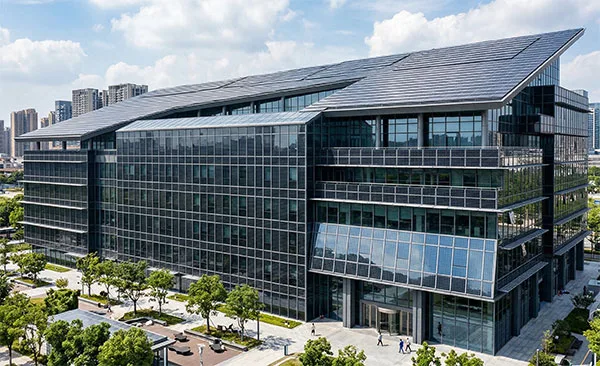
This is the biggest mistake. Standard rooftop PV and BIPV may use similar solar technologies, but the project logic is different. BIPV involves building-envelope performance, not just module installation.
Comparing Only Panel Price
A cheaper module does not always mean a better BIPV project outcome. If another system replaces conventional materials, reduces installation duplication, or offers better long-term durability, the total value can be stronger even if the module price is higher.
Ignoring Installation and Envelope Coordination
BIPV is often lost or won in detailing, not in the brochure. Suppliers that cannot explain installation sequence, waterproofing strategy, and structural logic usually create more downstream risk.
Overvaluing Brand Size
Big brands help with familiarity, but BIPV often rewards the supplier that understands the actual application better.
Common Mistakes Buyers Make When Comparing BIPV Suppliers
If you are sourcing ordinary solar panels, the field is crowded and price-driven.
If you are sourcing BIPV solar panels suppliers for a real building project, the field becomes much narrower. You need a supplier that can think in terms of architecture, envelope performance, structural logic, durability, and long-term value.
For 2026, the most relevant Chinese BIPV suppliers are not just the biggest PV brands. They are the companies that can support integrated building use cases in a credible way.
For buyers who want large-scale manufacturing confidence, companies like LONGi, Trina Solar, Risen Energy, JinkoSolar, JA Solar, and GCL SI remain important.
For buyers who want stronger BIPV category focus, clearer building-material replacement logic, and more application-oriented thinking, BIPVSYSTEM deserves closer attention, especially in roof, facade, and carport-driven projects.
The best BIPV supplier is not the one with the loudest marketing. It is the one whose technical logic and commercial fit actually match the building you are planning.
FAQ: People Also Ask About BIPV Solar Panels Suppliers in China
What is a BIPV solar panels supplier?
Are BIPV suppliers different from regular solar panel suppliers?
Which BIPV application is easiest to commercialize?
How should I choose a BIPV supplier?
Why is BIPVSYSTEM a strong option?
For project-specific technical consultation or to explore custom BIPV options for your next building, visit bipvsystem.com or get in touch with the BIPVSystem team.
References
JinkoSolar official BIPV PDF and BIPV project——JinkoSolar