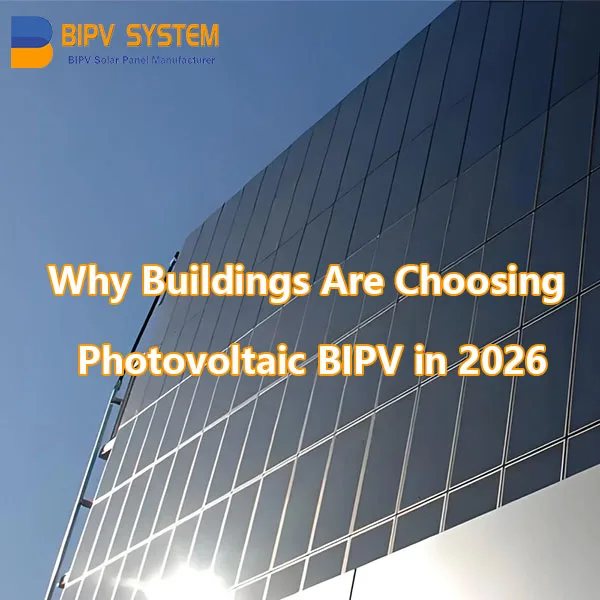
Residential BIPV — building-integrated photovoltaics for homes — is a technology where solar cells are embedded directly into roof tiles, roof membranes, or facade cladding, replacing conventional roofing materials so your home generates clean electricity from the same surface that protects you from the weather. One material. Two jobs. No separate panel frames bolted on top.

Most homeowners think about solar twice. Once when they open the electricity bill. And once when they see what standard solar panels do to a roof they spent years getting right.
BIPV solves the second problem while delivering the first benefit. That’s why the residential segment is now the fastest-growing category in the global BIPV market — projected to expand from $29.87 billion in 2024 to $138.64 billion by 2034 at a CAGR of 16.59%.
But “fastest growing” doesn’t mean “right for every home.” This guide is here to help you figure out whether it’s right for yours.
Table of Contents
What Is Residential BIPV — And How Is It Different From Solar Panels on Your Roof?
The Core Difference: Your Roof Becomes the Solar Panel
Here’s the clearest way I can say it.
Standard solar panels (technically called BAPV — Building-Applied Photovoltaics) are bolted on top of your existing roof. Your roof is still there doing its job. The panels are a second layer sitting above it.
BIPV is different. The solar element is the roof. There’s no “existing roof” underneath — the BIPV tile or membrane is simultaneously the waterproofing layer, the structural covering, and the electricity-generating surface. One component does the work of two.
This isn’t just a design philosophy. It has real financial implications.
Because BIPV replaces a conventional material you’d have to buy anyway — roof tiles, roof membrane, facade cladding — you’re not paying for solar on top of an already-budgeted building cost. You’re substituting one line item for another, with electricity generation as the upside. A 2021 SUPSI/Becquerel Institute report confirmed that decreasing manufacturing costs, increasing product performance, and growing regulatory pressure are all driving BIPV toward financial viability that standard solar comparisons have historically underestimated.
When you factor in the replacement value of conventional roofing, the effective additional cost of going BIPV rather than replacing your roof with standard materials is often significantly smaller than the gross BIPV price suggests.
The Four Forms of Residential BIPV
BIPV for homes isn’t one product. It’s a family of products designed for different roof types, design styles, and budget ranges.
Solar Roof Tiles are the most recognizable form. Individual tiles with integrated photovoltaic cells replace conventional clay, concrete, or asphalt shingles tile by tile. They look like conventional high-end roofing. Tesla Solar Roof, GAF Timberline Solar, SunTegra, and Luma Solar all operate in this category. This is the product most people picture when they hear “BIPV for homes.”
In-Roof PV Membrane Systems replace the waterproofing layer on flat or low-pitch roofs. Thin-film flexible PV modules bond to or replace the roof membrane entirely. Lower visual profile than panels. Common on modern flat-roof homes, garages, and extensions. Lighter than tile systems. Well-suited to retrofit projects where adding structural load is a constraint.
Facade-Integrated BIPV embeds solar cells into exterior wall cladding panels. Less common in residential than commercial, but increasingly used on contemporary homes with large, unobstructed south-facing walls or in passive-house designs where every building surface is optimized for energy performance.
Semi-Transparent Glazing BIPV uses PV glass as the glazing material in skylights, balustrades, conservatory roofs, or window panels. It admits filtered natural light while generating electricity. The visual effect is a subtle tint — like high-end architectural glass. Efficiency is lower than opaque modules, but the dual light-transmission benefit makes it compelling for extensions and glazed roof features.
What a BIPV Home Actually Looks Like
I get asked this constantly. Let me paint the picture properly.
Walk up to a home with BIPV solar roof tiles installed well, and you wouldn’t know it was generating electricity. The tiles sit flush with the roofline. There’s no aluminium frame racking. No visible wiring along the fascia. The profile is clean — in most installations, indistinguishable from a premium slate or clay tile roof at street level.
The Avancis Skala CIGS modules — used in both commercial and high-end residential projects — are visually identical to conventional facade or roofing panels at normal viewing distances. Busbars are only visible within 2 meters. In the Berlin BIPV Living Lab project, even building professionals standing outside couldn’t identify the panels without advance knowledge.
For HOA-restricted neighborhoods, this matters enormously. Standard solar panels often violate aesthetic guidelines. BIPV frequently doesn’t — because it looks like the architectural material it replaces.
Why More Homeowners Are Choosing BIPV Over Standard Solar
Your Home Doesn't Have to Look Like a Solar Farm
This is the number one reason homeowners who could go standard solar choose BIPV instead.
I’ll be direct about something: this is a legitimate engineering and architectural concern, not just vanity. The visual integration of solar into a building affects property value, resale potential, HOA compliance, neighborhood planning approvals, and the owner’s relationship with their home for the next 25–30 years. A system that generates electricity but makes your roof look like a commercial installation is a real compromise — and for many homeowners, it’s the compromise that stops them from going solar at all.
According to a SUPSI/Becquerel Institute analysis, appearance remains the primary barrier to BIPV adoption in the residential market. The good news is that this is precisely the barrier BIPV was designed to eliminate. Modern solar roof tiles achieve 17–23% efficiency while delivering a roofing aesthetic that’s architecturally intentional rather than industrially imposed.
You're Replacing Materials You'd Pay for Anyway
Here’s the reframe I use with every homeowner who opens with “but isn’t BIPV expensive?”
Yes. Compared to standard solar panels, BIPV costs more per watt. The average US solar panel installation costs roughly $30,000. A comparable BIPV solar roof installation typically runs $35,000–$70,000 depending on brand, roof size, and complexity. At face value, that premium looks significant.
But ask yourself: when was the last time you re-roofed your home? And what did it cost?
A standard asphalt shingle roof replacement for an average American home runs $8,000–$20,000. A premium tile or slate replacement can run $25,000–$45,000. That cost is coming whether you install solar or not.
When you subtract the conventional roofing cost from the BIPV installation cost, you’re often looking at a net solar premium of $10,000–$20,000 — not $35,000–$70,000. That’s a very different payback calculation.
Solar shingles can reduce annual home energy costs by 40–60%. At that savings rate, the net premium over conventional roofing pays back in a period that competes directly with standard rooftop solar — especially when tax incentives are factored in.
Rising Energy Codes Mean Your Next Roof Should Earn Its Keep
This is the argument I don’t hear enough in residential solar conversations.
California’s Title 24 already requires solar on most new residential construction. Similar mandates are spreading across other US states, EU member states, and urban planning codes globally. The residential segment is projected to be the fastest-growing BIPV end-user category from 2025 to 2032, fueled specifically by increasing government incentives and declining costs — not just consumer preference.
What this means practically: if you’re planning a roof replacement in the next 5–10 years, the regulatory environment in your market may well require on-site generation by the time that replacement comes due. Installing BIPV now means the transition is on your terms, at today’s incentive levels, rather than as a forced compliance cost later.
The US federal Investment Tax Credit (ITC) at 30% applies to BIPV installations and was confirmed through 2032 — covering both the solar function and, for true BIPV products where the solar generating function is inseparable from the roofing function, the full installed cost. That distinction matters: conventional roofing replacement costs do not qualify for the ITC. BIPV roof replacement costs often do.
Property Value: What the Research Actually Shows
Solar installations consistently increase residential property values. The question is by how much — and whether BIPV delivers a premium over standard solar.
Research indicates that BIPV solar shingles yield an ROI between 50% and 80% in property value terms, depending on style and type of installation. For a $30,000 BIPV solar roof installation, that means a home value increase of $15,000–$24,000. For a premium $70,000 installation, the value uplift can reach $35,000–$56,000.
Studies in California show solar installations typically increase home values by 3–5%. In markets with high electricity rates — California at $0.30–$0.32 per kWh — over 25 years, homeowners can expect cumulative net savings of $45,000–$90,000, with the additional property value appreciation on top.
What’s harder to quantify but real: a BIPV roof that looks like premium architectural roofing doesn’t just add energy value — it adds aesthetic value. A Tesla Solar Roof or high-quality BIPV tile installation is a selling point in premium markets in a way that standard panel racks are not.
The Real Cost of Residential BIPV — Honest Numbers
Upfront Cost: What You're Actually Comparing Against
Let me put the numbers on the table plainly.
Standard solar panel system (BAPV): ~$3.33/watt average in the US, roughly $25,000–$35,000 for a typical 9 kW residential system.
BIPV solar roof tiles: $3.50–$8.00/watt, total installed cost typically $27,000–$70,000+ depending on brand and roof size. The average solar shingle installation runs around $36,000 nationally — 15–25% higher than a standard panel system for comparable output.
Tesla Solar Roof specifically: $35,000–$70,000+ for an average home, with premium brands like Luma Solar reaching $70,000–$100,000+.
Chinese-manufactured BIPV systems (BIPVSystem and equivalent): Significantly more competitive on price for comparable product quality — with the additional advantage of deep customization capability in dimensions, transparency, and color that Western brands don’t offer at the same price point.
The comparison that matters most: after you apply the 30% federal ITC and subtract the avoided cost of conventional roofing, what is the net premium for going BIPV versus replacing your roof with conventional materials and adding standard panels? For many homeowners, that number is $5,000–$15,000 — not the $35,000–$70,000 gross price.
The Payback Period Calculation That Most Articles Get Wrong
Most payback calculations for BIPV are wrong because they compare BIPV against “doing nothing” — which isn’t the real alternative for a homeowner with an aging roof.
The correct calculation:
Net BIPV cost (gross price − ITC − avoided roofing cost) ÷ Annual energy savings = Real payback period
Using that framework:
- In sunny states like California or Hawaii: 6–8 years
- National average with ITC: 8–12 years
- Without ITC (post-2025 if credit changes): potentially 15–21 years — which is why the timing of your BIPV installation relative to current incentives matters significantly
After payback, the system provides 15–20+ years of effectively free electricity. Most BIPV products carry 25–30 year performance warranties. The long-term economics are not in question. The variable is how much of that period you capture net of the initial investment.
BIPV solar shingles have a lifespan of 25–30 years. Over that period, the cumulative energy savings and property value appreciation typically exceed the initial investment by a wide margin.
Incentives, Tax Credits, and Feed-in Tariffs That Change the Math
United States: The federal ITC at 30% applies to BIPV installations through 2032 (note: there is active discussion about changes to this schedule — verify current status with a tax professional). For a $50,000 BIPV installation, that’s $15,000 in federal tax savings. California and several other states add property tax exemptions: the value added to your home by solar installation is exempt from property tax reassessment — meaning the financial upside doesn’t come with a corresponding tax increase.
Europe: Feed-in tariff structures vary significantly by country. Germany, the Netherlands, and France have the strongest frameworks for residential BIPV financial support. The EU’s Energy Performance of Buildings Directive is creating increasing regulatory pressure — and financial incentive — for residential solar integration.
Australia: The Small-scale Renewable Energy Scheme (SRES) and state-level feed-in tariffs apply to BIPV installations. High solar irradiance across most of the country makes the energy yield case strong.
Key point for all markets: BIPV products — where the solar generating function is inseparable from the building material function — often qualify for incentive categories that standard rooftop solar panels do not. Always work with a tax professional and a BIPV-specialist installer to confirm applicable incentives before committing.
Our BIPV solar roof tiles and home systems are designed to meet certification requirements for incentive qualification in major international markets. If you want an honest assessment of the incentives applicable to your specific project and location, get a free residential BIPV assessment before you make any financial commitments.
Residential BIPV vs. Your Other Options — Honest Comparison
BIPV Roof Tiles vs. Standard Solar Panels
This is the comparison most homeowners are actually making. Here it is straight.
Standard panels are cheaper per watt, faster to install (1–3 days vs. 5–10 days for BIPV), and available from a much wider installer network. If you have a newer roof in good condition, aesthetics aren’t a priority, and your HOA allows visible panel racks — standard solar is probably the more cost-efficient path to on-site generation.
BIPV roof tiles make more sense when: your roof needs replacing anyway; aesthetics or HOA compliance matter; you’re building new and want to integrate solar from the start; or you want the property value premium of an architecturally integrated system rather than a visible add-on.
The efficiency numbers are comparable. Modern BIPV solar tiles achieve 17–23% efficiency — matching or approaching the performance of standard residential panels. The gap that existed five years ago has largely closed.
| Dimension | Standard Solar Panels (BAPV) | BIPV Solar Roof Tiles |
|---|---|---|
| Cost per watt | ~$3.33/W | $3.50–$8.00/W |
| Total installed cost | $25,000–$35,000 | $27,000–$70,000+ |
| Installation time | 1–3 days | 5–10 days |
| Roof condition needed | Roof must be sound | Replaces roof — condition less critical |
| Aesthetic result | Visible panel racks | Flush, architectural appearance |
| HOA compatibility | Often restricted | Usually compliant |
| Roof replacement credit | None | Offsets conventional roofing cost |
| Property value premium | Moderate | Higher (aesthetics + energy) |
| Warranty | 25-year power warranty | 25–30-year power + product warranty |
| ITC eligibility | Full solar cost | Full installed cost (roof + solar) |
BIPV vs. Tesla Solar Roof: What Nobody Tells You
Tesla Solar Roof is the most-searched BIPV product for residential homeowners — and for good reason. It’s beautiful, it has strong brand recognition, and the Powerwall integration is genuinely compelling.
But there are things Tesla’s marketing doesn’t tell you.
Tesla requires a full roof replacement, not just solar-active tiles. Approximately 35–40% of the tiles on a Tesla Solar Roof installation are non-solar “dummy tiles” — cosmetically identical to the solar tiles, but not generating electricity. You’re paying for a lot of premium roofing material that isn’t contributing to your energy output.
At $35,000–$70,000 (before incentives) for an average home, Tesla Solar Roof is one of the most expensive residential solar options per watt of actual output. For a $60,000 Tesla Solar Roof, the 30% ITC brings the net cost to ~$42,000 — still at the premium end of the BIPV market.
What Tesla delivers well: seamless aesthetics, strong warranty support, native Powerwall integration, and the clearest brand recognition in the category. If you want the most architecturally polished, fully integrated home energy system and budget isn’t the primary constraint, Tesla Solar Roof delivers.
What Chinese BIPV manufacturers deliver that Tesla doesn’t: significantly lower cost per watt for equivalent or higher panel efficiency; deep customization in dimensions, transparency levels, and color treatment; and engineering support for non-standard roof geometries and architectural specifications. A BIPVSystem custom solar tile solution can achieve comparable aesthetics to Tesla Solar Roof at materially lower cost — with the additional flexibility of custom design parameters that Tesla’s standardized tile system can’t accommodate.
China-Made BIPV vs. European/American Brands: The Real Difference
I want to address this head-on because it comes up in every international procurement conversation.
The assumption that Chinese BIPV means lower quality is not accurate in 2026. China holds a 22.4% share of the global BIPV market and dominates the upstream supply chain — producing the majority of the world’s photovoltaic cells, wafers, and glass regardless of whose brand is on the final product. Many European and American BIPV brands source core components from Chinese manufacturers.
The actual difference between Chinese and Western BIPV brands in the residential market is:
Price: Chinese manufacturers offer significantly more competitive pricing for comparable technical specifications. This isn’t low-quality pricing — it’s manufacturing scale and vertical integration.
Customization: Chinese BIPV manufacturers — particularly specialists like BIPVSYSTEM — offer custom dimensions, color matching, transparency levels, and printed pattern options that Western standard-product brands simply don’t provide. For residential projects with specific architectural requirements, this flexibility is often the deciding factor.
Certification: Leading Chinese BIPV manufacturers hold IEC 61215, IEC 61730, CE marking, and market-specific certifications. Always verify — but the certification gap that existed a decade ago has largely closed for established manufacturers.
Support infrastructure: Western brands have larger domestic installer networks. Chinese manufacturers require you to work with a qualified local installer for the physical installation, while the manufacturer provides system documentation and technical support. For homeowners comfortable with this model — similar to sourcing premium architectural materials internationally — the value proposition is strong.
For a detailed look at the strongest Chinese BIPV manufacturers, see our guide to leading BIPV manufacturers.
Is My Home Suitable for BIPV? A Practical Checklist
Roof Type, Age, and Orientation — What Matters Most
Not every home is an equally strong candidate for residential BIPV. Here’s how I assess suitability when a homeowner comes to me.
Roof orientation: South-facing roofs (in the northern hemisphere) are optimal. East and west orientations generate approximately 70–80% of south-facing yield — still financially viable in most markets. North-facing roof slopes are generally not recommended as primary BIPV surfaces. If your primary roof area faces north, focus on facade BIPV or east/west roof sections.
Roof pitch: Most BIPV tile systems are designed for pitches of 15°–60°. Very shallow or very steep pitches may limit product options. Flat roofs are well-served by in-roof membrane BIPV systems.
Roof age and condition: If your roof has 10+ years of remaining service life, retrofit BIPV involves removing a functional roof early — which affects the cost comparison. If your roof is near end-of-life or you’re building new, the timing is optimal: BIPV replaces what you were planning to spend anyway.
Shading: BIPV performs best with minimal shading from trees, chimneys, dormers, or adjacent buildings. Heavy shading significantly reduces energy yield and extends payback periods. A shading analysis using digital modeling is standard practice in any credible BIPV feasibility assessment.
Roof area: For a typical US home requiring a 9 kW system, you need approximately 500–600 sq ft of usable, well-oriented roof area. Homes with complex roof geometries (multiple valleys, hips, dormers) have more unusable area and may achieve lower system output per roof square foot.
Structural loading: BIPV tile systems are typically heavier than asphalt shingles but comparable to or lighter than clay or concrete tile. A structural engineer should verify that your roof framing can support the BIPV system’s dead load before installation on older homes.
New Build vs. Renovation: Which Path Makes More Sense
New build: The strongest case for residential BIPV. You have maximum design flexibility — the roof structure, orientation, electrical system layout, and inverter room location can all be optimized for BIPV from day one. No conventional roofing cost to pay. The full BIPV investment is replacing a cost that would exist anyway.
Roof renovation (end-of-life roof): The second-best scenario. Your conventional roofing cost is already budgeted. BIPV substitution replaces that line item. This is the scenario where the net cost calculation most often surprises homeowners — in a good way.
Roof in good condition: The case is weaker here. You’re paying to remove functional roofing material earlier than necessary. This can still make financial sense if electricity rates are high, incentives are strong, and the aesthetic or compliance benefits are significant to you — but the numbers need to be modeled carefully.
Facade addition: Adding BIPV cladding to an existing home’s facade, without any roof work, is viable for contemporary homes with large south-facing walls. This is the path I recommend for homeowners who want BIPV benefits but have a recently replaced roof.
What the Installation Process Actually Looks Like
This is what I wish more BIPV content explained clearly, because the uncertainty around installation is one of the main reasons homeowners delay the decision.
Timeline: BIPV solar roof tile installation takes 5–10 days for an average home. This is longer than standard panel installation (1–3 days) but comparable to a standard roof replacement. Plan for 1–2 weeks of disruption.
The process: Existing roofing is removed. The BIPV tile or membrane system is installed following manufacturer specifications. Electrical connections are made within the roof system to a junction box, then routed to the inverter (typically in a garage, loft, or utility room). Grid connection and metering are arranged through your utility provider. System commissioning and monitoring setup are completed.
Who installs it: BIPV requires a contractor with both roofing and electrical certifications. Not every solar installer has BIPV experience, and not every roofer has solar electrical knowledge. Specialized BIPV installation experience matters — particularly for the weatherproofing details at panel junctions and penetrations.
Does it damage the existing structure? A properly specified and installed BIPV system does not damage the underlying structure. The fixings are designed for the specific structural system. The waterproofing layer is a primary engineering consideration in the system design, not an afterthought.
Here’s the thing most homeowners don’t realize: finding a supplier who handles both the photovoltaic specification and the building envelope engineering is the most important single decision in a residential BIPV project. When those two domains are handled by different parties — panel supplier on one side, roofer on the other — the interface between them is where problems happen.
At BIPVSystem, we provide complete system documentation that includes weatherproofing details, structural fixing data, and installation guidance — specifically because we’ve seen what happens when the roofing contractor has to improvise the panel junction details. Our BIPV solar roof tiles and home systems are supplied with everything the installer needs to execute a weathertight, code-compliant installation.
Not sure whether your home is a good candidate? We’ll tell you honestly. Get a free residential BIPV assessment — we’ll review your roof orientation, condition, shading, and location, and give you a straightforward answer about whether BIPV makes technical and financial sense for your specific situation before you commit to anything.
BIPV Solar Roof Tiles vs. Standard Panels — Full Comparison
| Dimension | Standard Panels (BAPV) | BIPV Roof Tiles | BIPV Facade / Glazing |
|---|---|---|---|
| Replaces building material | No | Yes (roof tiles) | Yes (cladding / glazing) |
| Aesthetic integration | Visible frames & racks | Flush, architectural | Seamless wall / window |
| Module efficiency | 20–23% | 17–23% | 10–18% |
| Cost per watt | ~$3.33 | $3.50–$8.00 | $5–$12 |
| Installation complexity | Low | Medium–High | High |
| Roof condition requirement | Good existing roof | Replaces roof | N/A (wall application) |
| ITC eligibility (US) | Solar cost only | Full installed cost | Full installed cost |
| Payback period | 7–11 years | 8–15 years | 10–20 years |
| 25-year net savings | High | High + property value | Moderate + light control |
| HOA / planning compliance | Often restricted | Usually compliant | Usually compliant |
| Best scenario | Good roof, any aesthetic | End-of-life roof / new build | Contemporary homes, glazed features |