Stuck between solar shingles and traditional panels? We break down the core 2025 differences between BIPV vs. BAPV regarding waterproofing, heat dissipation, fire safety, and ROI. Discover why new EU and US regulations make BIPV the smarter choice for modern buildings.
Table of Contents
Summary
What is the main difference between BIPV and BAPV?
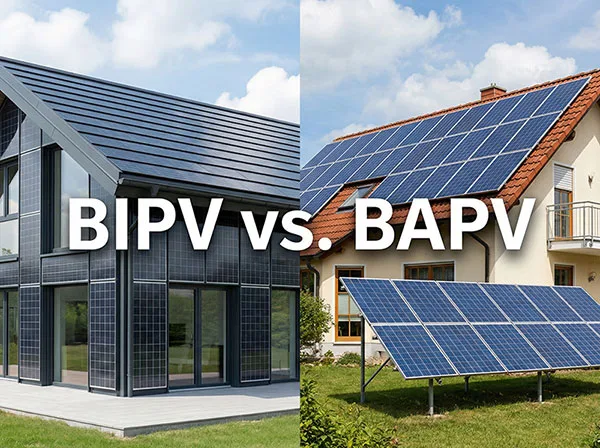
BAPV (Building Applied PV) follows an “addition” logic, where solar modules are attached to an existing structure using mounting brackets. It functions purely as an energy generation device.
In contrast, BIPV (Building Integrated PV) follows a “fusion” logic, where the photovoltaic modules replace traditional building materials (like roof tiles or façade glass).
BIPV serves a dual purpose: it generates power while simultaneously acting as the building’s weatherproof skin.
Simply put, The difference between BIPV and BAPV , BAPV is “1+1=2” (Building + Device), while BIPV is “1+1=1” (Power-Generating Building).
BIPV vs. BAPV - Why 2025 is the Turning Point
For the past decade, BAPV dominated the market due to lower upfront costs. However, 2025 marks a watershed moment where strict building codes are shifting the balance toward integration.
EU Solar Mandates: The European Union “Solar Rooftop Standard” is reshaping the landscape. By 2027, all new public and commercial buildings with a useful floor area larger than 250 m² must feature solar installations. This mandate expands to all new residential buildings by 2029, effectively making BIPV a standard building requirement rather than a luxury add-on.
California Title 24 (2025 Update): California continues to lead the US with its 2025 Energy Code updates. New standards for assembly buildings and substantial renovations now require solar and energy storage integration, pushing architects to adopt BIPV to meet compliance without sacrificing aesthetics.
China 14th Five-Year Plan: As the world largest PV market, China has set aggressive targets for 2025, mandating BIPV application in new public institution buildings and factory roofs. This policy drive has significantly matured the supply chain, lowering global costs for BIPV materials.
BIPV vs. BAPV Waterproofing: Passive Sealing vs. Active Drainage
BAPV (The “Patch” Approach): Installing BAPV often requires drilling holes into the existing roof to secure mounting brackets. While chemical sealants and flashing are used, these penetrations create potential failure points over time as materials degrade.
BIPV (The Structural Approach): Modern BIPV systems, particularly flat photovoltaic tiles, utilize a mechanical lock structure similar to traditional roofing. They feature built-in diversion channels that actively guide rainwater away, eliminating the need for sealant reliance.
Pro Tip: leading BIPV solutions are designed to pass rigorous wind-driven rain tests (like EN 50583), ensuring they function as a primary waterproof layer.
BIPV vs. BAPV Heat Dissipation: The Efficiency Trade-off
BAPV: These systems typically sit 10-15 cm above the roof surface. This gap allows for an “air chimney effect,” where natural convection cools the panels, helping them maintain higher efficiency during hot summers.
BIPV: Because BIPV modules are integrated directly into the building envelope (often replacing insulation or roofing), they lack rear airflow. This can lead to higher operating temperatures and a potential efficiency loss of 3-5%.
2025 Solution: Newer BIPV designs are mitigating this by incorporating micro-ventilation channels within the frame or utilizing heat-resistant cell technologies like HJT or Perovskite.
BIPV vs. BAPV Fire Safety: The New 2025 Standards
Fire safety regulations have tightened significantly. For example, Italy’s 2025 Fire Prevention Guidelines now clearly distinguish between BAPV and BIPV. Since BIPV is part of the building structure, it must meet stricter reaction-to-fire classifications (often Class A or equivalent) compared to standard add-on panels.
Is BIPV Really More Expensive?
The common misconception is that BIPV is prohibitively expensive. However, when you calculate the Total Cost of Ownership (TCO) using a Marginal Cost model, the math changes.
2025 BIPV vs. BAPV Market Cost Comparison
| Cost Component | BAPV (Add-on Solar) | BIPV (Integrated Solar) |
|---|---|---|
| Hardware Cost | $1,000 - $2,500 / kW | $3,000 - $5,000 / kW |
| Roofing Material | Extra Cost Required (Shingles/Tiles) | **$0 (Included)** |
| Labor | Two Steps (Roofer + Solar Installer) | One Step (Integrated Install) |
| ROI Speed | 5-7 Years | 8-12 Years (25-30% faster in commercial) |
| Aesthetics | Industrial Look | Premium / Invisible |
The Marginal Cost Argument
If you are building a new home or replacing an old roof, you should not compare the full cost of BIPV against BAPV. Instead, compare the BIPV cost against the combined cost of a high-end roof + a BAPV system.
Scenario: A high-end solar shingle roof costs approx. $21-$25 per sq. ft. This effectively combines two major home improvements into one investment, often making it competitive with slate or metal roofing options.
Future Trends: Transparent and Colored PV
In 2025, solar is no longer just a black rectangle.
Transparent Solar Glass: For skyscrapers and commercial facades, new tandem solar cells (Perovskite/Organic) have achieved record efficiencies of over 12% with 30% transparency. This turns windows into power generators without blocking the view.
Aesthetic Camouflage: Manufacturers can now produce colored BIPV modules that mimic terracotta, wood, or stone with minimal efficiency loss (maintaining up to 98% of standard performance). This allows historic buildings to go green without violating preservation codes.
BIPV vs. BAPV Conclusion: Which System is Right for You?
Choose BAPV if:
Your existing roof is in excellent condition (less than 5-10 years old).
You prioritize the absolute highest power output and fastest payback period.
You are not restricted by HOA rules or aesthetic codes.
Choose BIPV if:
You are constructing a new building or require a full roof replacement (Retrofit).
You are located in a region with strict mandates (EU 2027/29, California Title 24).
You want to increase property value with a “Tech-Luxury” aesthetic that hides the solar components.
Ready to renovate your building? Contact us to help you calculate the costs.