Bipv Aesthetics means using optical treatments, color coatings, surface textures, and hidden structural design to turn PV modules into building materials that are both visually expressive and power-generating. Instead of being a device “added onto” a building, the PV becomes part of the façade, roof, or exterior skin—producing clean electricity while giving the architecture its own visual language.
By customizing transparency, color balance, and advanced optical nano-structures, (bipv aesthetics) bridges the gap between conventional PV and modern design, allowing an “energy asset” to blend seamlessly into the skyline and support a net-zero vision.
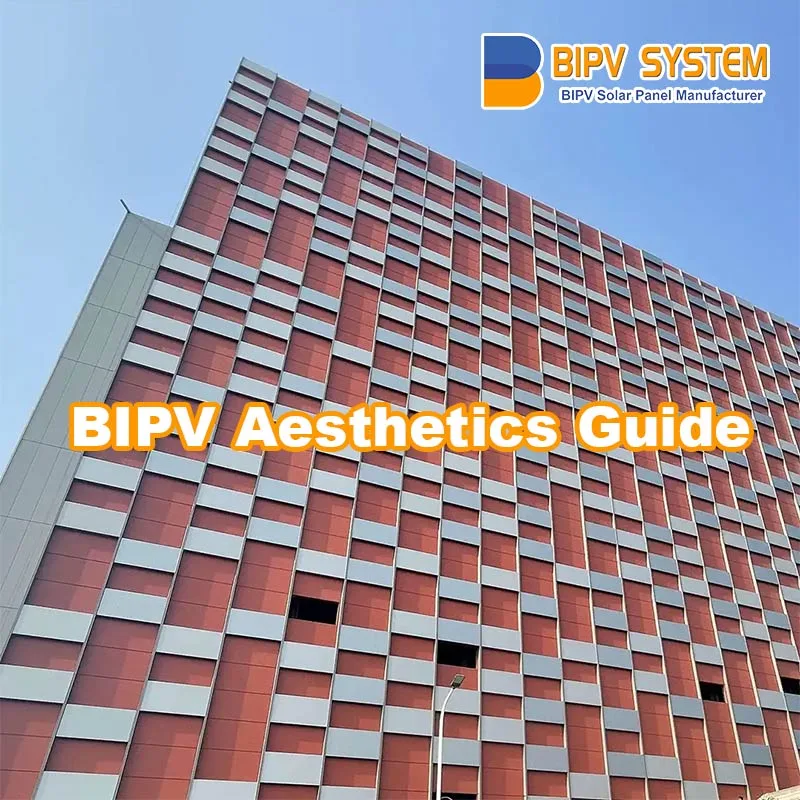
Over the past few years, many architects pushed back on BIPV because those deep-blue silicon cells felt like they were “ruining” the building. I’ve heard the same thing from clients more times than I can count: they don’t hate solar—they hate the idea that solar will kill the building’s look.And honestly, I get it. I still believe true sustainability shouldn’t require sacrificing beauty.
Table of Contents
Bipv Aesthetics isn’t decoration—it’s system capability
WBDG (a respected U.S. building knowledge platform) defines BIPV as being part of the building envelope or building component. That one sentence changes everything: it means aesthetics can’t be a “skin you add later.” It has to work at the material and construction level from day one.
So when you plan bipv aesthetics, you’re really answering three questions:
Does it look like your original building material? (color, texture, module layout, reflectivity)
Can it function long-term as a roof or facade? (weathering, waterproofing, structure, safety)
How much generation is traded for appearance—and is it worth it?
When choosing BIPV, ask yourself three questions.
Q1: What matters most to you?
A. “It must look like a normal building material” (low solar look) → Choose opaque façade BIPV or roof-tile/roof-integrated BIPV
B. “It should express architecture” (color, texture, artistic statement) → Choose colored BIPV or structural-color BIPV
C. “We need daylight and transparency” → Choose BIPV glass (transparent / semi-transparent)
Q2: Where will it be installed?
A. Facade / curtain wall → Opaque façade, colored, structural-color, or BIPV glass
B. Roof → Roof-tile / roof-integrated systems (best for “looks like a roof”)
C. Canopy / walkway / shading → Semi-transparent BIPV glass often works well (power + daylight control)
Q3: How much “generation trade-off” can you accept?
A. Minimal (output first) → Avoid strong color/texture; use layout and detailing to achieve aesthetics
B. Moderate (balanced) → Use colored/structural-color/glass solutions with a defined performance floor
C. High (approval/design first) → Prioritize visual integration; treat generation as long-term added value
What most people actually want from Bipv Aesthetics—five practical categories
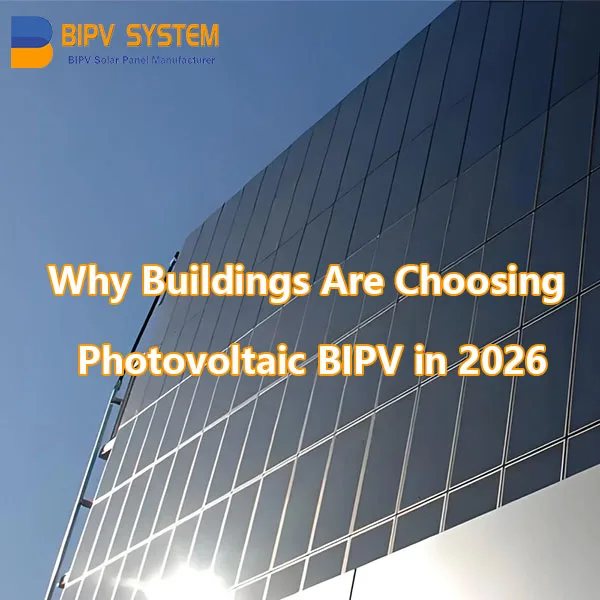
1. Opaque facade BIPV that looks like stone/metal/ceramic
This is a strong fit for dense urban facades. You’re using a large surface area to generate power—turning “material cost” into an “energy-producing skin.” Early NREL BIPV work also describes BIPV as design-integrated building elements like shading, canopies, and BIPV facade system.
Common applications: spandrel zones, rainscreen systems, exterior cladding panels.
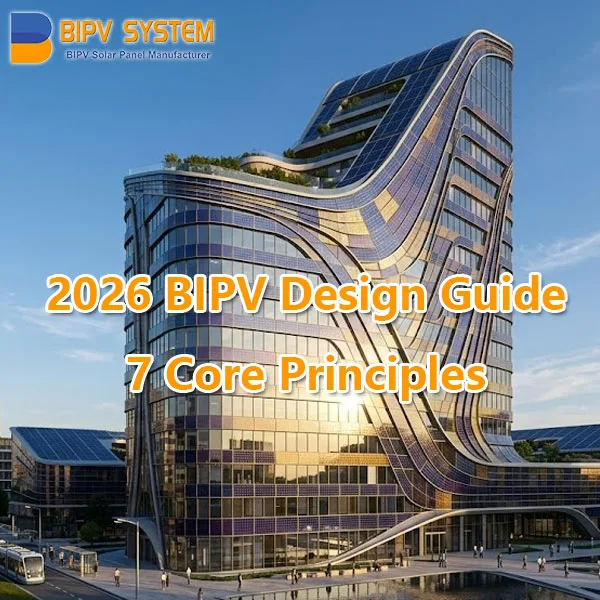
2. Colored BIPV: color isn’t “paint”—it’s optical engineering
A very common first reaction is: “Colored modules must produce much less.” That concern is valid. Research reviews emphasize that in BIPV, shape/size/color become architectural requirements—while color approaches must balance efficiency, glare, and durability.
Even more important: institutions have publicly discussed the social acceptance effect—Fraunhofer ISE has highlighted that well-integrated colored modules can improve acceptance, especially in heritage contexts.
3. Structural color: the “doesn’t fade” premium route (great for high-end facades)
Recent research has spotlighted structural colors for BIPV: compared with traditional pigments, they can be more stable and may reduce the “beauty vs output” pain.
I usually describe it like this:
“The color comes from structure, not coating.”
It feels more like a premium material—less like something applied on top.
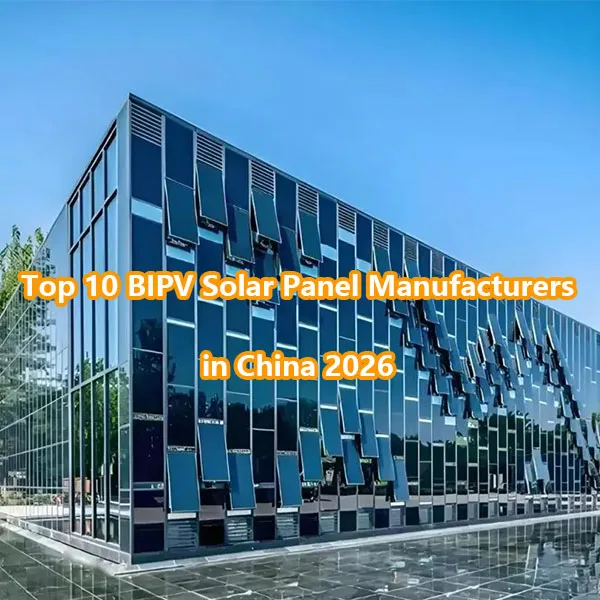
4. BIPV glass: transparent / semi-transparent PV windows and curtain walls
For glass BIPV, the aesthetic core isn’t color. It’s visible pattern, transparency, grid perception, and reflectance control. Vitro’s BIPV glass design options are a good example of treating “aesthetics parameters” and “performance parameters” as one unified decision.
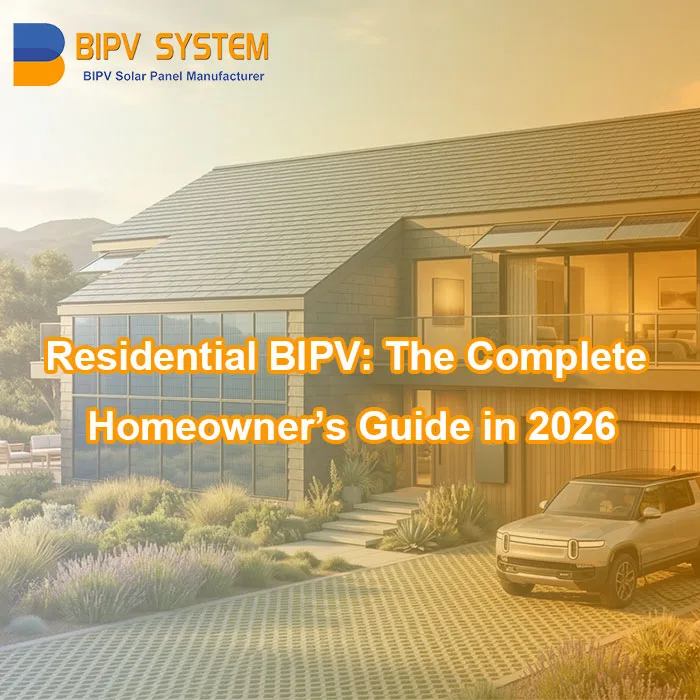
5. Roof-integrated BIPV (tiles / modular roofing): removing the “added-on” look
Roof aesthetics are unusually strict because the roof is the most visible plane. HOA rules and heritage areas can make “solar appearance” a deal breaker. Roof tiles and roof-integrated systems appear more like traditional roofing and often face less resistance.
How do you balance Bipv Aesthetics and generation?
✅ A checklist that turns “design taste” into engineering language
Glare & reflectivity: assess nearby roads, airports, and residential sensitivity early (late fixes hurt)
Module layout strategy: design it like façade panels—not like a “power plant array”
Performance floor: define an acceptable generation trade-off range (agree on rules before design freezes)
Durability & maintenance: ask for public evidence or reports about long-term stability of coatings/structures
Once you have this list, architects and electrical engineers stop arguing in different languages—you finally share a decision framework.
A key point: bipv aesthetics isn’t only “looks”—it’s approval and social acceptance
I’ve seen projects where budget and technology were ready, and then everything stalled because an authority said: “It looks too industrial.”That moment is frustrating—because it’s not a technology failure. It’s an acceptance failure.
Institutional discussions consistently point to the same reality: visual integration affects social acceptance, especially in appearance-sensitive building types.
So when you work on Bipv aesthetics, you’re usually doing three things:
- Reducing approval friction (planning, heritage districts, HOA)
- Improving sale/rent appeal (turning the “energy skin” into a value story)
- Moving BIPV from “added tech” to “architectural language”
BIPV Aesthetics reference table:
| Aesthetic method | Visual outcome | Output trade-off trend | Best locations | Common |
|---|---|---|---|---|
| Low-saturation / material-like color | Blends in, low “solar look” | Low | Large facades, roofs | “Will it still look like PV?” |
| Strong color (colored BIPV) | High design freedom, strong statement | Medium–High | Iconic facades, cultural buildings | “Will it generate enough?” |
| Structural color (premium) | High-end texture, stable color potential | Medium | Premium facades, branded buildings | “Batch consistency / cost?” |
| Heavy texture / matte / low-glare | Less glare, more material-like | Medium | Roads/airports/visual-sensitive zones | “Is output sacrificed?” |
| Semi-transparent BIPV glass | Daylight + energy | Medium (linked to transparency) | Canopies, atriums, glass zones | “Is daylight enough? Pattern visibility?” |
| Higher-transparency glass | Closest to standard glazing | Medium–High | Daylight-first areas | “Beautiful but lower yield?” |
FAQ
What problem does Bipv aesthetics solve?
It makes PV blend into roofs/façades/glass like true building materials, reducing the “added-on” look while meeting envelope and electrical requirements.
Does colored BIPV generate much less electricity?
Colored solutions often introduce optical losses, but with the right coloring route and thermal design you can trade a controlled loss for better acceptance and approvals.
What details do architects care about most in Bipv aesthetics?
Module rhythm and facade grid, joints and frames, glare control, color tolerance between batches, and buildable integration with roof/façade systems.
How should I choose BIPV glass for aesthetics?
Focus on transparency, visible pattern/grid perception, and reflectance control—then balance these with energy performance requirements.
Why is aesthetics more critical for residential projects?
Roofs are highly visible and often restricted by HOA or neighborhood appearance rules. Roof-integrated BIPV tends to look more like traditional roofing.
Recommended reading
At BIPVSYSTEM, we believe that a building’s skin should be as smart as it is beautiful. We don’t just manufacture solar glass; we provide the technical canvas for your architectural vision.
Are you struggling to match a specific brand color with a solar-active facade? Let us run a “Color-to-Yield” simulation for your project and find the perfect balance.