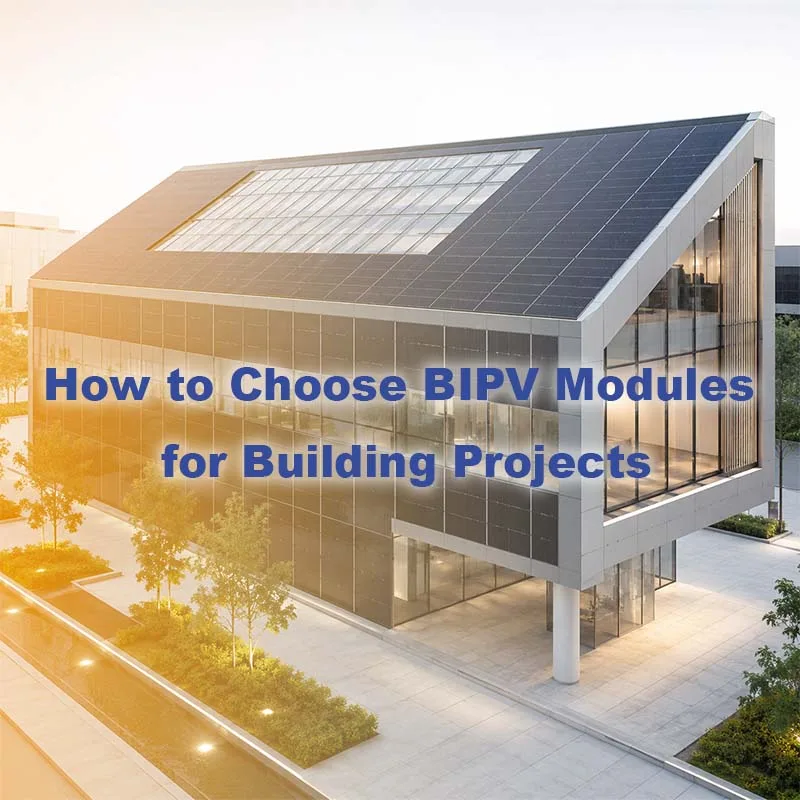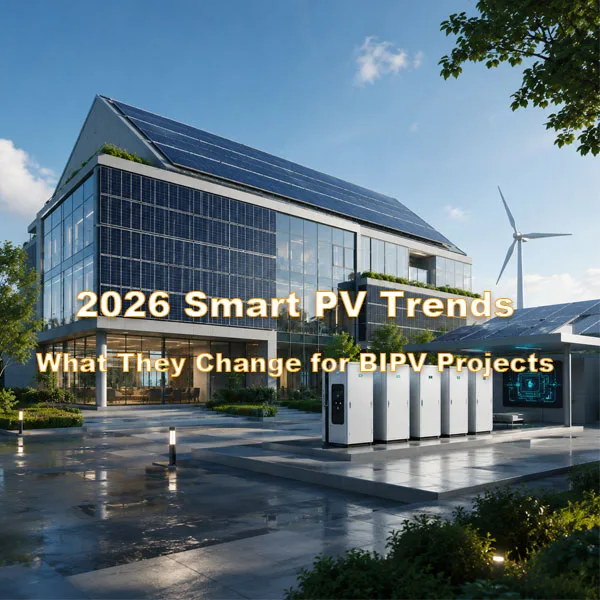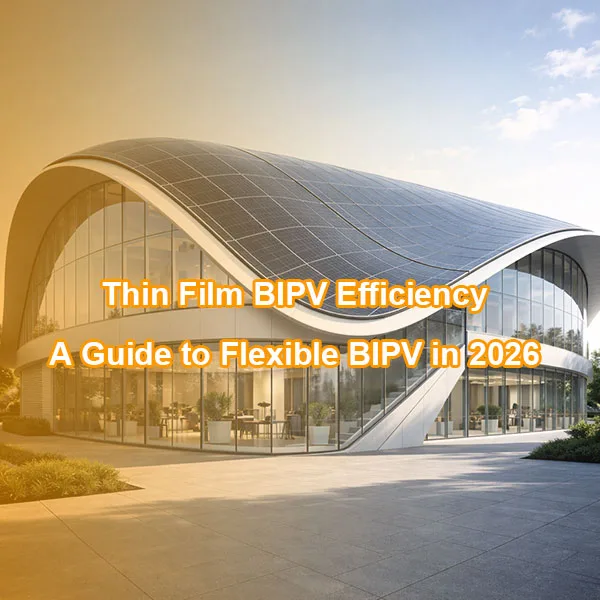
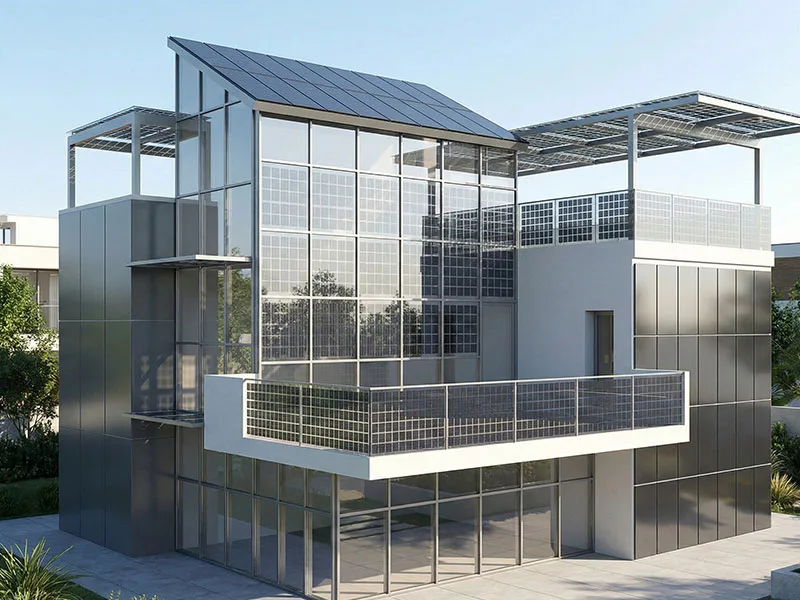
BIPV (Building Integrated Photovoltaics) offers the advantage of effectively combining a building’s green energy with its aesthetic appeal. This makes buildings more environmentally friendly and intelligent, reducing energy consumption and operating costs, thereby significantly increasing the building’s return on investment. But before diving into the details, we need to clarify the core concept: What is BIPV? In this article, we will share comprehensive insights into BIPV, including its concept, classifications, application examples, design steps, and cost structure analysis.
Table of Contents
What is BIPV?
BIPV is an abbreviation for Building-integrated photovoltaics.
BIPV seamlessly integrates solar power generation (photovoltaic) products into the building envelope. BIPV modules are not only power generation devices but also an integral part of the building materials. They replace traditional building materials such as roof tiles, glass curtain walls, windows, or awnings, while providing both power generation and building protection (windproof, rainproof, and heat insulation).
BIPV vs. BAPV
To fully understand what is BIPV, it is crucial to distinguish it from BAPV. This is the most easily confused concept. In the current market, most of the rooftop solar panels we often see belong to BAPV .
| Features | What is BIPV | What is BAPV |
|---|---|---|
| Meaning | Photovoltaics are building materials; they are designed and installed simultaneously during house construction. | Photovoltaic systems "added" after the house is built |
| Installation method | Replacement for roof, walls or glass | Secured to the existing roof using brackets. |
| Outward | Seamlessly integrated with the architecture, invisible and aesthetically pleasing. | Abrupt, potentially disrupting the original lines of the building. |
| Function | Power generation + building envelope (waterproofing/sunshading/load-bearing) | Only generating electricity |
| Design phase | Intervention is required in the early stages of architectural design. | Installable anytime |
Main application forms of BIPV
BIPV has a wide range of applications, including roofs, sunshades, building facades, and solar carports. It can be applied to almost any surface of a building that is exposed to sunlight.
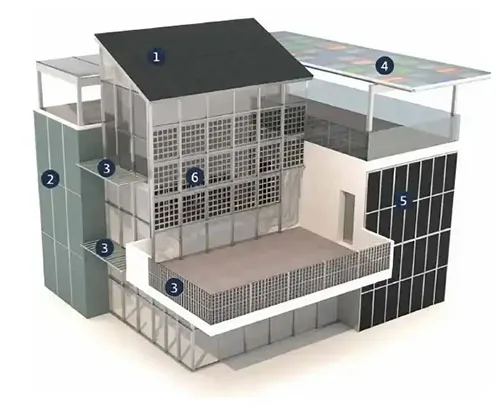
1.BIPV Roof System
BIPV Roof System may look like ordinary terracotta or asphalt shingles, but they are actually photovoltaic solar cells. They are ideal for high-end residences where aesthetics are important. They can also be used directly as roofing material for factories, eliminating the need for corrugated steel sheets and saving on replacement costs.
For high-rise buildings, rooftop area is limited, but the walls represent a vast energy goldmine. BIPV facades can replace traditional glass curtain walls or stone cladding, transforming the entire building into a vertical power station. Furthermore, BIPV curtain walls support various custom colors, are aesthetically pleasing, and possess superior wind and hail resistance, making them ideal for high-rise residential buildings and shopping malls.
3.Photovoltaic glass and skylights
Translucent photovoltaic technology (usually thin-film or double-glass modules) can be used as skylights, greenhouse roofs, or windows. While generating electricity, they also provide shade and reduce indoor temperature.
4.Other external forms of BIPV
These include Solar Carports, balcony railings, and shading louvers. These are all easy-to-implement BIPV formats, and they also have very good prospects for the future.
Why choose BIPV? (Advantages of BIPV)
1. Green Energy: BIPV generates green energy from solar power, which does not pollute the environment. Solar energy is the cleanest and free energy source, and its development and utilization do not produce any ecological side effects. It is also a renewable energy source, inexhaustible and readily available.
1. Green Energy: BIPV generates green energy from solar power, which does not pollute the environment. Solar energy is the cleanest and free energy source, and its development and utilization do not produce any ecological side effects. It is also a renewable energy source, inexhaustible and readily available.
2. No land occupation: BIPV modules are typically installed on unused rooftops or exterior walls, requiring no additional land, which is especially important for urban buildings where land is expensive. Summer is the peak electricity consumption season, coinciding with the period of highest solar radiation and peak photovoltaic power generation, thus playing a role in peak shaving for the power grid.
3. Architectural Aesthetics: BIPV solves the problem of photovoltaics being “ugly.” It allows for customization of colors, textures, and light transmittance, making the photovoltaic system invisible within the building and meeting architects’ demanding requirements for modern design.
4. Bonus points for green building certification: For commercial real estate, BIPV is a powerful tool for obtaining green building certifications such as LEED (Leadership in Energy and Environmental Design) or BREEAM, which can significantly enhance property value and corporate image.
5. Energy Conservation and Emission Reduction: High-quality BIPV modules typically feature laminated or double-glazed glass structures, offering excellent thermal and sound insulation properties, effectively reducing air conditioning energy consumption within buildings. This significantly lowers the overall outdoor temperature, reduces wall heat gain and indoor air conditioning cooling load, thus contributing to building energy conservation. Therefore, developing building-integrated photovoltaics can achieve “energy conservation and emission reduction.”
Challenges and limitations of BIPV
Although Building Integrated Photovoltaics (BIPV) offers numerous advantages such as high efficiency, economy, and environmental friendliness, and is widely used in many commercial and industrial applications, it has not yet seen large-scale adoption in residential buildings. This is due to several key challenges associated with BIPV.
Higher initial investment: Compared to building materials alone, BIPV requires a larger initial investment.
Design and construction barriers: BIPV requires interdisciplinary collaboration (architectural design + electrical engineering), and cannot be installed by just finding an electrician like ordinary photovoltaics.
Unstable: Solar photovoltaic power generation is unstable and greatly affected by weather, exhibiting fluctuations. This is because the sun is not present 24 hours a day; therefore, addressing the volatility of solar photovoltaic power generation is a key issue that needs to be resolved.
Orientation limitations: BIPV installed vertically on a wall typically has lower power generation efficiency than rooftop PV with the optimal tilt angle, so overall benefits are more important than individual power generation.
About What is BIPV FAQ
Q——In simple terms, what is BIPV? What is BIPV essentially?
It stands for Building-Integrated Photovoltaics, a technology that replaces conventional building materials with solar generating parts, merging functionality with aesthetics.
Q——How long is the lifespan of BIPV photovoltaic modules?
Standard BIPV photovoltaic modules typically have a lifespan of around 30 years, comparable to that of standard building materials.
Q——Is BIPV really waterproof?
Yes. A qualified BIPV system starts with building materials. They must pass rigorous building material standard tests, including waterproofing, wind pressure resistance, fire resistance, and impact resistance tests.
Q——Is BIPV suitable for renovating an old house?
If an older house needs roof renovation or exterior refurbishment, this is an excellent time to use BIPV. If the original structure does not need to be replaced, using BAPV may be more economical.
The Future of BIPV
BIPV solutions represent a turning point for the entire building industry. Buildings will emerge as energy producers in the future market. With advancements in BIPV technology and declining costs, it is possible that every house in the world in the future, from its windows and roof to its exterior walls, will become a source of clean energy.