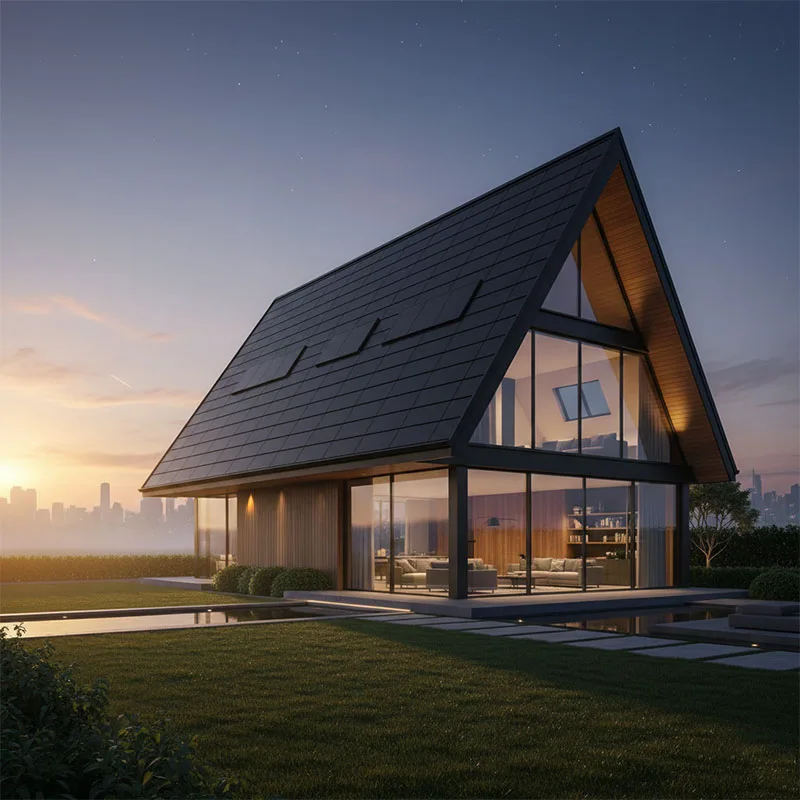
BIPV installation integrates photovoltaic collectors into the building envelope—roof, facade, glazing, or canopy—so the PV system replaces conventional exterior materials while generating electricity.
In normal words: you’re not “mounting solar on a roof,” you’re building the roof/facade with solar—so installation must satisfy both envelope performance (water, wind, durability) and electrical safety. WBDG (U.S. DOE) describes BIPV as PV elements located directly within the building envelope (or canopy).

I’ll be honest: the worst BIPV projects I’ve seen didn’t fail because of technology. They failed because someone treated envelope detailing as “later.” That’s how you end up with the dreaded sentence: “We’re seeing moisture behind the PV.”
Table of Contents
1. Before you install: choose the right BIPV “application family”
BAPV sits outside the envelope; BIPV is integral to the envelope.
From an installation point of view, that creates three common families:
Roof-integrated BIPV (tiles/shingles/metal roof systems)
Facade-integrated BIPV (rainscreen, curtain wall, spandrel replacement)
Canopies / carports (structure + PV roofing)
Why this matters: the trade lead changes. Roof BIPV is roofing-led; facade BIPV is façade/curtain-wall-led; carports are steel-structure-led.
2. The “non-negotiables”: standards, documents, and who owns the envelope
BIPV’s core compliance reality
IEC 63092-1 explicitly treats BIPV modules as PV modules used as building products, focusing on properties relevant to building requirements and electrotechnical requirements.
What I recommend you lock down before any material ships:
BIPV module technical file: datasheets, application category, installation constraints
Envelope detail set: drainage paths, flashing strategy, penetrations, edge conditions
Electrical single-line & stringing plan
QA/QC and inspection hold points
Warranty boundary: who warrants waterproofing, and under what installation conditions
If that sounds “too contractual,” trust me—this is where projects either stay calm, or become a blame game.
Authority reference worth linking:
IEA PVPS Technical Guidebook includes annotated reference drawings for roofs/facades/double-skin facades—very installer-friendly.(Reference: Building-Integrated-Photovoltaics-Technical-Guidebook.pdf)
3. Step-by-step BIPV installation workflow
Below is the workflow I use regardless of roof or façade. The task order is what keeps projects from rework.
Step 1 — Site & envelope readiness survey
- Structural capacity and attachment zones
- Drainage geometry (roof pitch, valleys, gutters, weeps)
- Shading constraints and service access
- Fire/electrical pathways (routes for DC/AC, inverter location, disconnects)
Step 2 — Shop drawings + mock-up
If your project includes a facade or curtain wall, a mock-up saves money.
Step 3 — Substrate prep (the hidden part that decides waterproofing)
Roof BIPV often requires coordinated installation of:
- underlayment / water barrier
- cable conduits or protected routing
- insulation / ventilation strategy (varies by climate)
Example technical sequencing is discussed in building-focused research summaries.
Step 4 — Mechanical installation in zones (roof / facade / canopy)
Install BIPV like a building skin: one controlled zone at a time, with inspection points.
Step 5 — Electrical integration
- Stringing according to plan
- DC cable protection (abrasion, UV, bend radius, strain relief)
- Grounding/bonding per local code
- Inverter/optimizer commissioning
Step 6 — Testing & commissioning
At minimum:
- Visual + torque verification
- Insulation resistance testing (where applicable)
- Functional monitoring check (string-level or module-level)
- Waterproofing inspection points (especially after the first storm)
Step 7 — Handover package
Deliver:
- as-built drawings
- O&M manual + replacement procedure
- monitoring access + alarms
- Internal link suggestion:
4. Installation specifics by application
Key principle: the roof must shed water even if one module is replaced later.
Common design moves:
interlocking geometry + drainage channels
flashing at edges, ridges, valleys, penetrations
protected wire raceways under the active layer
Key principle: treat BIPV as facade cladding with power—ventilation, weeps, thermal breaks, and safe cable routes must be engineered.
Key principle: structure + waterproof roof + electrical routing + drainage management.
Carports are often the “fastest win” because you control geometry and avoid complex roof penetrations.
5. The top 5 BIPV installation mistakes and the fast fix
Mistake: Treat BIPV like normal PV
Fix: Put envelope details in the drawing set from day one.
Mistake: No defined drainage path at edges/penetrations
Fix: Add failure-mode drainage sketches (wind-driven rain, blocked weeps)
Mistake: Cable routing left to “installer experience”
Fix: Lock cable paths, protection, and service loops in shop drawings
Mistake: No replacement strategy
Fix: Define “single-module replacement procedure” in O&M handover
Mistake: No monitoring baseline
Fix: Capture commissioning baseline yield and alarm thresholds
6. “Why is BIPV installation cost different?”
NREL’s residential BIPV analysis emphasizes bottom-up cost tradeoffs including components and installation labor, comparing BIPV cases against a rack-mounted PV reference case—useful for explaining why labor and integration details matter.
My practical translation: BIPV cost isn’t only “PV cost.” It’s roofing/facade scope + PV scope, bundled into one buildable system. When teams compare it to “PV alone,” the spreadsheet lies.
7. 2026 BIPV Installation Checklist
✅ Pre-Design & Procurement (before shop drawings)
- BIPV scope confirmed: roof / facade / canopy (not “we’ll decide later”)
- Warranty boundaries written: who owns waterproofing performance
- BIPV module intended mounting category defined (installation constraints included)
- Local code review: fire access, disconnects, grounding/bonding, lightning/SPD approach
✅ Shop Drawings & Mock-Up (before site work)
- Edge/penetration details: ridge, eave, valley, parapet, window heads/sills
- Drainage path shown for failure scenarios (wind-driven rain, blocked weeps)
- Cable routing shown (protected, abrasion-safe, UV-safe, serviceable)
- Facade projects: mock-up planned (it saves money—every time)
✅ BIPV Installation & QA (during works)
- Zone-by-zone installation plan + inspection hold points
- Torque + fastener log + photo documentation
- Electrical checks: continuity/grounding, string polarity, insulation resistance (as applicable)
- Envelope checks: flashing integrity, weeps clear, seals/gaskets verified
✅ Commissioning & Handover (before sign-off)
- Monitoring verified (string or module level—at least zone level)
- As-built drawings delivered + replacement procedure included
- Maintenance access plan confirmed (how to replace one module safely)
- Owner training completed + warranty conditions clearly stated
8. How we support installers and project teams
As a factory, the most useful thing we can do is reduce uncertainty:
- reference details you can build from
- predictable interfaces and QC checkpoints
- clear documentation so trades don’t fight
- serviceability designed in (not “hope”)
If you’re planning a 2026 project, send: building type + country + roof/facade choice + target kW, and we’ll reply with a buildable, installation-ready concept pack (typical + customizable).
FAQ
How long does BIPV installation take compared to traditional roofing?
While the initial planning is longer, the actual on-site time is often shorter. Because you are installing the “roof” and the “solar” in one single step, you eliminate the need for a secondary roofing contractor and mounting crew.
Can any roofing contractor perform a BIPV installation?
We strongly advise against it. BIPV installation requires a hybrid skill set of glazing/roofing and high-voltage electrical expertise. We recommend teams that have specific certifications in integrated solar or working with a BIPV manufacturer’s supervised team.
What is the biggest risk in BIPV installation?
Envelope interfaces—waterproofing, drainage, penetrations, and long-term serviceability—because BIPV is part of the building skin.
What’s the best reference for BIPV installation details?
IEA PVPS Task 15’s Technical Guidebook provides annotated reference drawings across roof and facade systems and best practices for implementation.
Recommended reading
At BIPVSystem, we’ve seen it all—from the perfect glass monoliths to the DIY disasters. We don’t just ship crates; we provide the engineering blueprints and the on-site guidance to ensure your BIPV installation is a benchmark for the industry.
Would you like me to send you our “2026 Installation Checklist” for your project manager to review? Let’s make sure those wires are hidden and that power is flowing.