
BIPV Curtain Wall System
Top Solar-Integrated Building Facades Manufacturers in China
If you’re searching for reliable BIPV curtain wall modules manufacturers who are based in China, BIPVSYSTEM is the company you’ve been looking for. Replace conventional cladding with N-type BIPV curtain wall modules that generate clean electricity while serving as your primary building envelope. Engineered for commercial towers, government buildings, and zero-carbon architecture — with 30-year performance warranty and full international certifications.The professionals accompany every client personally to tailor the solution best for them. Get in touch with us and find out how BIPVSYSTEM can improve your BIPV project.
- Economical Pricing Options
- CE TÜV CQC ISO9001
- Excellent pre-sales and after-sales service
Save a minimum of 35% or more on your purchases.
Linear Power Warranty
Patents Held
Completed Projects
QC Inspection Checkpoints
What Is a BIPV Curtain Wall?
Let’s be completely direct with you: “BIPV” stands for Building-Integrated Photovoltaics. The curtain wall is the non-structural outer skin of a building — and BIPV turns that skin into a power plant. Not bolted on top. Not retrofitted after the fact. Built in, from the start.
Here’s the thing that surprises most procurement managers when they first sit across from us: the solar glass is the curtain wall. You’re not adding cost on top of a conventional facade — you’re replacing the facade material with one that generates electricity. When you frame it that way, the economics look very different.
A BIPV curtain wall window panel functions simultaneously as a structural glazing unit, a thermal envelope component, a daylighting element, and a power generator. That’s four building systems compressed into one skin. Every square meter of facade becomes an asset, not just an expense.
💡 Key Insight:
Research published in Renewable & Sustainable Energy Reviews (Shukla et al., 2017) found that BIPV facades can offset between 25%–70% of a commercial building’s annual electricity consumption, depending on orientation, latitude, and panel transparency level.
We’ve seen clients come to us after being sold “BIPV” by vendors who were simply strapping standard PV modules onto a unitized frame. That’s BAPV — Building-Added Photovoltaics — and the difference is not just semantic. It affects structural load calculations, fire ratings, insulation performance, and frankly, it looks different too.
Traditional Facades Are a Cost Centre.
BIPV Curtain Wall Is a Revenue-Generating Asset.
The true comparison is not “BIPV vs. glass curtain wall” — it’s “BIPV vs. curtain wall + 30 years of purchased electricity.” When framed correctly, the premium shrinks dramatically.
| 🔷 Traditional Glass Curtain Wall | 🔷 BIPVSYSTEM BIPV Curtain Wall System |
|---|---|
| ✗ Generates no energy return | ✓ Generates clean electricity for 30+ years |
| ✗ 30-year energy cost accumulates (~$150–320/m²) | ✓ Offsetting electricity cost from day one of grid connection |
| ✗ No contribution to green building certification | ✓ Counts toward LEED, Green Mark, BREEAM credits |
| ✗ Static appearance — no differentiation value | ✓ Custom colour and transparency for architectural identity |
| ✗ Carbon-neutral claims require separate PV system | ✓ Integrated system — no additional rooftop or ground array needed |
| ✗ Two separate procurement processes (envelope + energy) | ✓ Single supplier, single warranty, single point of accountability |
BIPV does not add a solar system on top of a traditional curtain wall — it replaces the cladding material entirely. The true cost comparison is: (BIPV system cost) versus (traditional curtain wall material cost + 30 years of purchased electricity for the equivalent facade area). A south-facing commercial tower with 2,000 m² of facade area typically offsets USD $180,000–$420,000 in grid electricity over a 30-year lifespan at current tariff rates, depending on project location and local irradiance.
How the BIPV Curtain Wall System Works
BIPV Curtain Wall Working Principle
N-type monocrystalline silicon cells are laminated between two glass layers using photovoltaic-grade PVB (polyvinyl butyral) interlayer film. Unlike EVA film used in standard rooftop modules, PVB is specified for curtain wall applications because of its superior structural interlayer performance under cyclic wind load — a critical requirement when the glass panel is also carrying facade dead weight and wind pressure simultaneously.
The ultra-white front glass is specified for maximum solar transmittance (≥91.5%), minimising reflection losses before light reaches the cell surface. The heat-strengthened back glass provides the primary structural load path under gravity and wind — a combination that conventional solar glass cannot deliver. In vertical facade orientation, angle-of-incidence losses are higher than in optimally tilted roof installations, but N-type cell technology partially compensates through superior response to diffuse and low-angle light — the dominant irradiance condition on a building facade in most latitudes above 35°.
Generated DC current is routed through concealed cables within the aluminium curtain wall profile — no exposed wiring, no penetrations through the insulated glass unit. String configuration in a curtain wall layout requires careful electrical design: unlike a uniform roof array, facade modules face varying shading conditions from adjacent buildings, overhangs, and wing walls. Module-level power electronics (optimisers or micro-inverters) are specified for any facade where shading analysis indicates partial shading on more than 10% of panels during peak irradiance hours.
Module Layer Structure — Cross Section
Ultra-White Tempered Front Glass
Photovoltaic-Grade PVB Film
N-type Monocrystalline Silicon Cells
Photovoltaic-Grade PVB Film (Rear)
Heat-Strengthened Back Glass
Edge Seal + Silicone Perimeter
Concealed DC Cable Exit
Full System Parameters
All electrical values at STC (1000 W/m², 25°C, AM 1.5). Actual energy yield depends on site irradiance, facade angle, shading, and inverter efficiency.
| Parameter | Standard Range | Premium N-type | Notes |
|---|---|---|---|
| Cell Technology | PERC Mono | N-type TOPCon | N-type recommended for vertical facades |
| Cell Efficiency | 19.5–20.8% | 21.5–22.5% | STC conditions |
| Module Power Range | 100–300 Wp | 150–380 Wp | Varies by size configuration |
| Module Power Tolerance | 0 / +5 Wp | 0 / +3 Wp | Positive tolerance guaranteed |
| Temperature Coefficient (Pmax) | -0.34%/°C | -0.26%/°C | Lower = better facade performance in warm climates |
| NOCT | 45 ± 2°C | 42 ± 2°C | Lower NOCT = better real-world output |
| Operating Temperature | -40°C to +85°C | IEC 61215 tested | |
| Maximum System Voltage | 1000 V DC (IEC) / 1500 V DC (available) | ||
| Short-Circuit Current (Isc) | 8.5–10.2 A | 10.5–13.5 A | Depends on module size |
| Open-Circuit Voltage (Voc) | 38–45 V | 40–48 V | Depends on cell string count |
| Front Glass | Ultra-white tempered, 4–8 mm | PVD coating available for colour | |
| Back Glass | Heat-strengthened, 5–10 mm | 5+5 / 6+6 / 8+8 standard | |
| Encapsulant | Photovoltaic-grade PVB | EVA available on request | |
| Light Transmission (VLT) | 10% – 50% | Cell spacing determines VLT | |
| SHGC Range | 0.18 – 0.42 | Lower SHGC reduces cooling load | |
| Fire Performance | Class A (GB 8624) · Class B1 (EN 13501) | Complies with China and European requirements | |
| Impact Resistance | EN 356 P2A (anti-vandal available) | ||
| Warranty — Year 1 Degradation | ≤ 2% | Measured against initial rated power | |
| Warranty — Annual Degradation | ≤ 0.55% per year (Years 2–30) | ||
| Warranty — Minimum at Year 30 | ≥ 83.6% of initial rated power | Linear power warranty |
Colour × Transmittance × Power Output
| Colour Option | VLT (%) | SHGC | Approx. Power (per m²) | Suitable For |
|---|---|---|---|---|
| Clear (standard) | 30–50% | 0.38–0.42 | 120–145 Wp/m² | Office interiors requiring daylight |
| Blue (architectural) | 20–35% | 0.28–0.35 | 110–135 Wp/m² | Commercial towers, mixed-use |
| Green (architectural) | 18–30% | 0.25–0.32 | 108–130 Wp/m² | Institutional, healthcare |
| Grey (neutral) | 15–28% | 0.22–0.30 | 105–128 Wp/m² | High-rise commercial, premium office |
| Bronze / Gold | 12–22% | 0.20–0.27 | 100–120 Wp/m² | Luxury hospitality, landmark buildings |
| Opaque black (spandrel) | < 5% | 0.18–0.23 | 145–165 Wp/m² | Spandrel zones, service floors |
| Custom RAL / NCS colour | 10–40% | Variable | Per engineering review | All project types — MOQ applies |
Glass Thickness × Application Guide
| Configuration | Max Panel Size | Max Wind Load | Typical Application |
|---|---|---|---|
| 5+5 mm (total 10 mm) | 1600 × 2400 mm | 1.5 kPa | Low-rise, protected facades |
| 6+6 mm (total 12 mm) | 1800 × 3200 mm | 2.0 kPa | Mid-rise standard, most common specification |
| 8+8 mm (total 16 mm) | 2200 × 4000 mm | 3.2 kPa | High-rise, coastal exposure, large bay spacing |
| 10+10 mm (total 20 mm) | 2400 × 4800 mm | 4.5 kPa | Super high-rise, unitized systems above 150m |
Design Freedom Without Compromise
Colour Customisation
Custom colours are produced via physical vapour deposition (PVD) coating applied to the front glass surface before lamination. The PVD process deposits a metalite thin film of precise thickness, producing colour through interference rather than pigmentation — this means colour is consistent across production batches and does not fade under UV exposure over the 30-year product lifespan.
The trade-off is direct: deeper, more saturated colours require a thicker PVD layer, which reduces solar transmittance and therefore reduces power output per m². Our engineering team will provide a colour-specific power output calculation for your project. We use the RAL Classic and NCS systems for colour matching. Custom colour MOQ is 200 m² of finished module area (approximately 100–140 individual panels). Sample A4-sized colour glass is available free of charge; sample cost is credited against your first production order.
Size Customisation
Manufacturable module dimensions: minimum 400 × 600 mm, maximum 2,400 × 5,000 mm. Minimum size is governed by electrical stringing requirements — below a minimum cell count, open-circuit voltage is insufficient for standard string inverter compatibility. Maximum size is governed by our toughening furnace chamber dimensions (2,500 mm width limit) and transportation logistics for overseas delivery. Submitting your bay spacing drawing allows our engineering team to optimise module dimensions to your structural grid without waste.
5-Step Architect Collaboration Workflow
1. Submit Design Brief
2. Engineering Review (3–5 Working Days)
3. BIM File Delivery
4. Sample Confirmation
5. Production & Delivery
From Specification to Grid Connection
Measured energy yield data from completed installations — not predicted values. Every project below is grid-connected and operating.
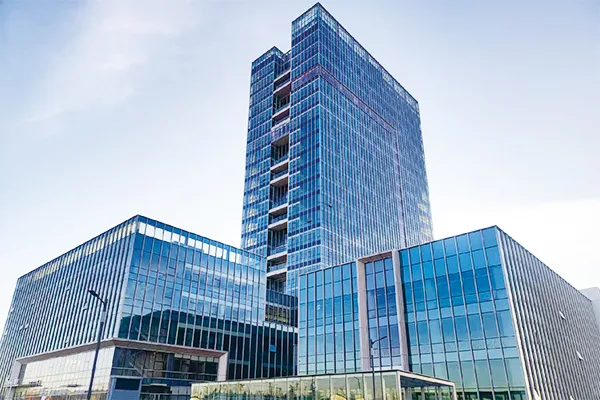
BIPV Case of Government Office Building Project
BIPV Facade
Light transmittance
78%
Power (Wp/m²)
125W
Cost recovery period
≈ 12 years
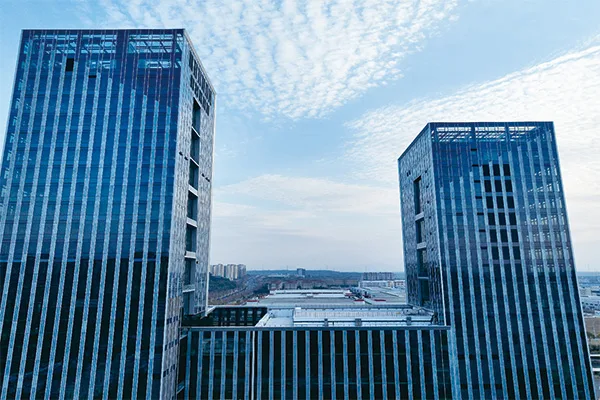
BIPV Case of Twin Towers Office Building Project
BIPV Facade
Light transmittance
82%
Power (Wp/m²)
140W
Cost recovery period
≈ 11 years
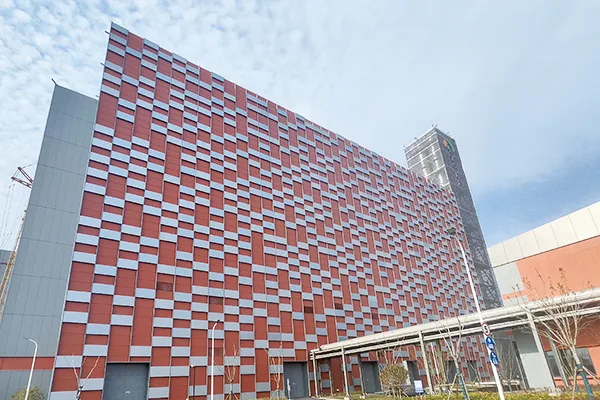
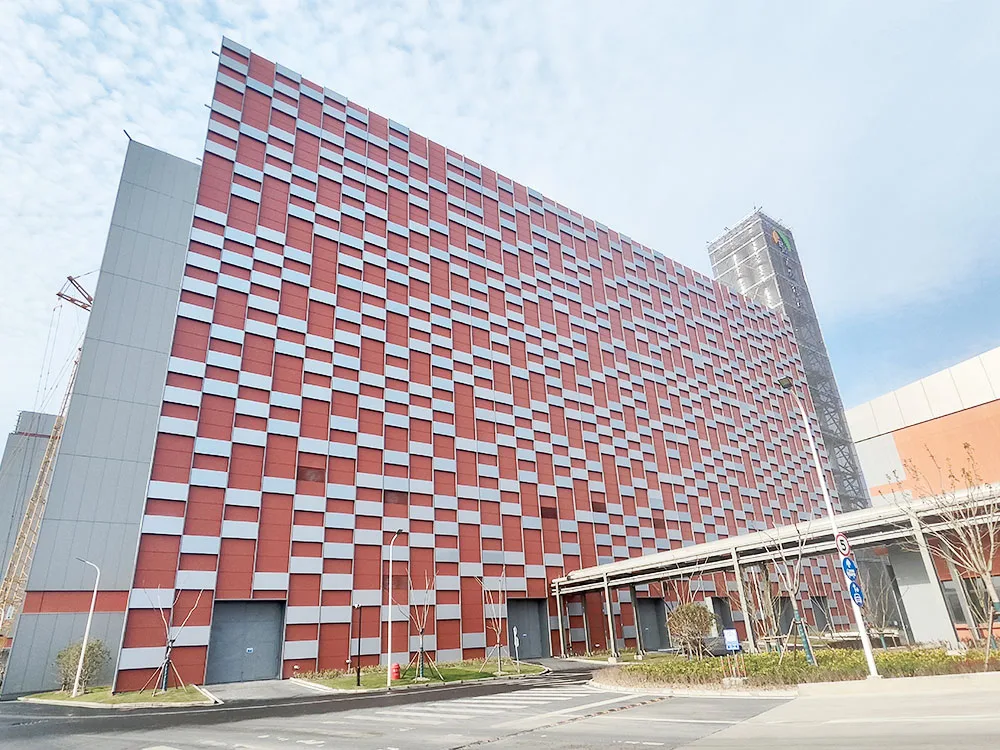
Shopping Mall BIPV Colored Facade Project
BIPV Facade
Light transmittance
74%
Power (Wp/m²)
135W
Cost recovery period
≈ 12 years
Independently Verified. Institutionally Trusted.
TÜV Rheinland — IEC 61215 / IEC 61730
2. Engineering Review (3–5 Working Days)
3. BIM File Delivery
4. Sample Confirmation
5. Production & Delivery